
You check your credit score one morning and see a factor called “credit mix” sitting there with a yellow or red rating next to it. Now you’re wondering if this is the reason your score isn’t climbing, and whether you need to run out and open a new loan to fix it. It’s a stressful spot to be in, especially when a mortgage application or car loan is around the corner.
The good news is that credit mix is one of the smaller pieces of your score, and in most cases, you don’t need to do anything drastic.
In this guide, we’ll break down what counts, what doesn’t, and the smart way to handle it.
Key Takeaways
This guide explains what credit mix is and how much it affects your credit score, including the three account categories, FICO and VantageScore weighting, and when opening new credit is worth it.
Core Facts:
- Credit mix measures the variety of account types on a credit report, sorted into three categories: revolving (credit cards, HELOCs), installment (auto loans, mortgages, student loans), and open credit (some utilities, cell plans, charge cards).
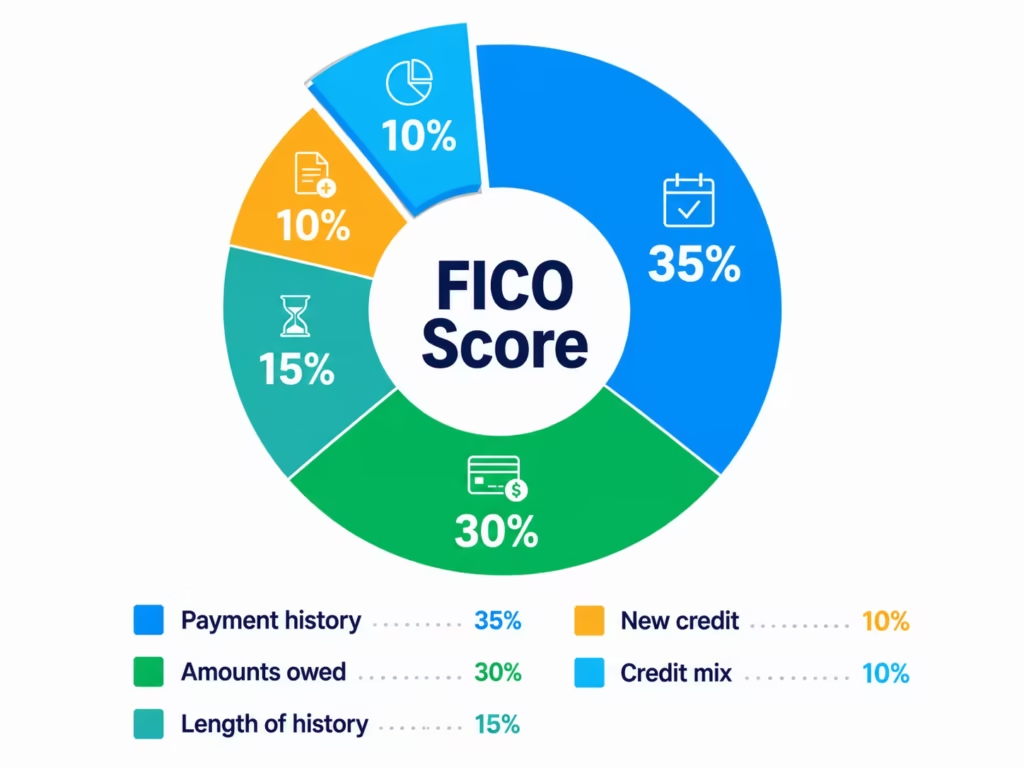
- Credit mix makes up 10% of a FICO Score, translating to roughly 50 to 55 possible points on the 300 to 850 scale.
- VantageScore combines credit mix with account age into a category called depth of credit, which accounts for about 20% to 21% of the score.
- Payment history (35%) and amounts owed (30%) together make up 65% of a FICO Score, far outweighing credit mix’s 10%.
- A missed payment can drop a score by 60 to 100 points, while a thin credit mix typically costs only 10 to 20 points.
- Rent, utilities without a reporting service, streaming subscriptions, and most short-term Buy Now, Pay Later plans do not count toward credit mix.
Best for:
- Readers who see a low or “fair” credit mix rating on an app like Credit Karma and want to know if it’s worth fixing.
- People deciding whether to open a new loan or credit card specifically to diversify their account types.
- Anyone preparing for a mortgage or major loan application who wants to prioritize the score factors that matter most.
What Is Credit Mix?
Credit mix is the variety of credit account types listed on your credit report. It looks at whether you have different kinds of borrowing on file, like a credit card, a car loan, or a mortgage, all working together.
You’ll usually spot this term in two places. The first is on a full credit report from Experian, Equifax, or TransUnion. The second is inside a free scoring app like Credit Karma or your bank’s mobile app, often shown as a bar or letter grade.
Lenders and scoring models care about this factor because it shows how you handle different types of debt. Someone who juggles a credit card and a car payment on time is showing a wider range of responsibility than someone with just one type of account. That’s the whole idea behind why credit mix meaning gets discussed as a scoring factor at all.
The Types of Credit That Make Up Your Mix
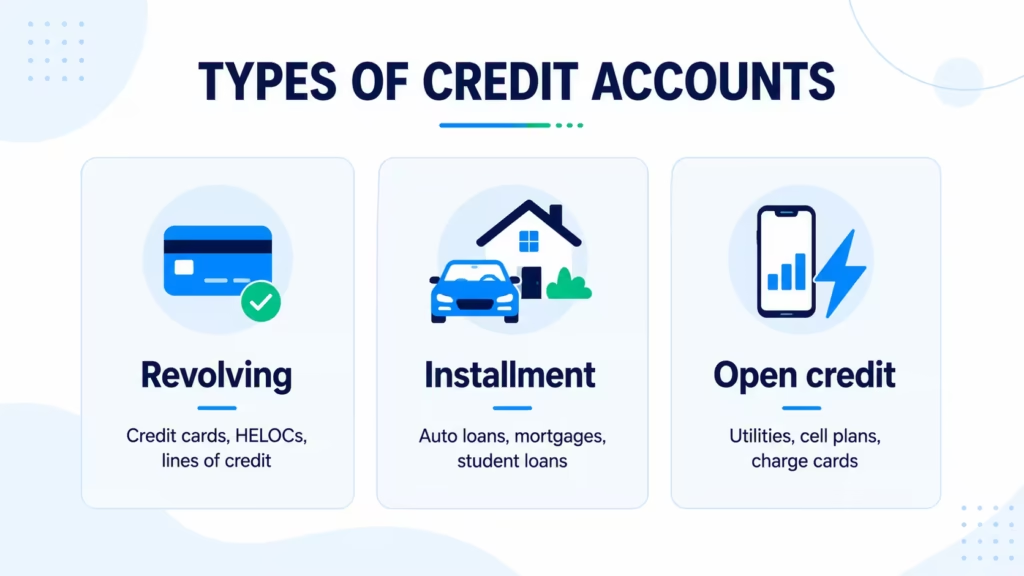
Not every account on your report counts the same way. Scoring models sort your accounts into three main buckets: revolving, installment, and open credit. Understanding these credit account types helps you look at your own report and know what you’re seeing.
Having only one type, like two or three credit cards, doesn’t really count as a “mix.” A true mix means you have at least two different categories showing up on your file.
Revolving Credit
Revolving credit lets you borrow up to a set limit, pay some or all of it back, and then borrow again. The balance goes up and down as you use it.
Common examples include:
- Credit cards (Visa, Mastercard, store cards)
- Home equity lines of credit (HELOCs)
- Personal lines of credit
You’ll see these labeled as “revolving” on your credit report. The credit limit and current balance are the two numbers scoring models watch closely here.
Installment Credit
Installment credit is the opposite setup. You borrow a fixed amount once, then pay it back in equal payments over a set number of months or years. The balance only goes down.
Common examples include:
- Auto loans
- Mortgages
- Personal loans
- Student loans
Once the loan is paid off, the account closes but often stays on your report for up to 10 years, still helping your mix and history.
Open Credit Accounts
Open credit is the third category, and it’s the one most people forget about. With open credit, you use the service during a billing period and then pay the full balance when the bill arrives. There’s no carrying a balance from month to month.
Common examples include:
- Some utility accounts that report to bureaus
- Cell phone plans that report payments
- Charge cards (like certain American Express cards with “pay in full” terms)
This category is less common on the average report, but newer scoring models are starting to give it more weight, so it’s worth knowing about.
What Does NOT Count Toward Credit Mix
Plenty of things you pay every month don’t factor into your mix at all, even if they show up on your credit report through other means. Here’s the direct list:
- Rent payments (unless reported through a rent-reporting service, and even then they usually count toward payment history, not mix)
- Utilities paid on time without a service that reports them
- Streaming subscriptions like Netflix, Spotify, or Hulu
- Most Buy Now, Pay Later (BNPL) plans such as Klarna, Afterpay, and Affirm’s shorter “Pay in 4” products
BNPL is where readers get tripped up the most. Some BNPL loans, especially longer ones, do report to bureaus and can show up as installment credit. But the short “pay in four” plans usually don’t. If you use BNPL, check the fine print or your credit report to see if it’s actually being reported.
Even when these items appear on your report, they may only affect payment history or the accounts list, not the mix of revolving credit and installment credit specifically.
How Much Does Credit Mix Affect Your Credit Score?
This is where real numbers matter, because the answer changes depending on which scoring model you’re looking at.
FICO Score Weighting
Credit mix makes up 10% of your FICO Score, according to myFICO, the official consumer site of FICO. On a 300 to 850 scale, that translates to roughly 50 to 55 possible points tied to this one factor.
That’s nothing, but it’s also not the number that decides whether you get approved for a mortgage. Payment history and credit utilization carry far more weight, which we’ll get to in a moment.
VantageScore Weighting
VantageScore treats this idea a bit differently. Instead of a standalone “credit mix” bucket, it uses a category called “depth of credit,” which combines mix with the age of your accounts.
Depth of credit accounts for about 20% to 21% of a VantageScore. That’s double the FICO weighting, but keep in mind it also includes credit history length, so mix alone isn’t 20%. The two factors share that space.
This is why the same person can see different ratings on different apps. Your bank might show your FICO Score, while Credit Karma shows a VantageScore. One app might say your mix is “fair” and another might say “excellent.” Both can be right because the models weigh things differently.
📌 Did You Know: FICO doesn’t include a “credit mix” factor at all in some of its industry-specific scores like the FICO Auto Score. So when you apply for a car loan, the lender may be looking at a slightly different formula than the one your free score app shows.
How Credit Mix Compares to Other Credit Score Factors
To decide where to spend your effort, it helps to see all five FICO factors side by side.
| FICO Factor | Weight |
|---|---|
| Payment history | 35% |
| Amounts owed (credit utilization) | 30% |
| Length of credit history | 15% |
| New credit | 10% |
| Credit mix | 10% |
Payment history and credit utilization together make up 65% of your score. If your score isn’t where you want it, those are almost always the two areas to look at first. Missing a single payment can drop a score by 60 to 100 points, while a “thin” credit mix might only be costing you 10 to 20 points.
A limited mix is rarely the real problem. It’s usually a symptom of being early in your credit journey, and it corrects itself as life goes on. So if you’re deciding what to fix first, chase payment history and utilization before you worry about opening a new type of account.
What a Good Credit Mix Looks Like
There isn’t one “perfect” mix that every credit expert agrees on. But a solid baseline is having at least one revolving account and one installment account reporting on time.
Here’s how a healthy mix might look at different life stages:
- Early credit (ages 18–25 or new to credit): One or two credit cards, maybe a student loan. That’s already a decent mix.
- Established credit (mid-career, homeowner or car owner): One or two credit cards, an auto loan, and a mortgage. This is often considered a strong profile.
- Mature credit: A mix of cards, a paid-off auto loan still on the report, a current mortgage, and possibly an open-credit account like a charge card.
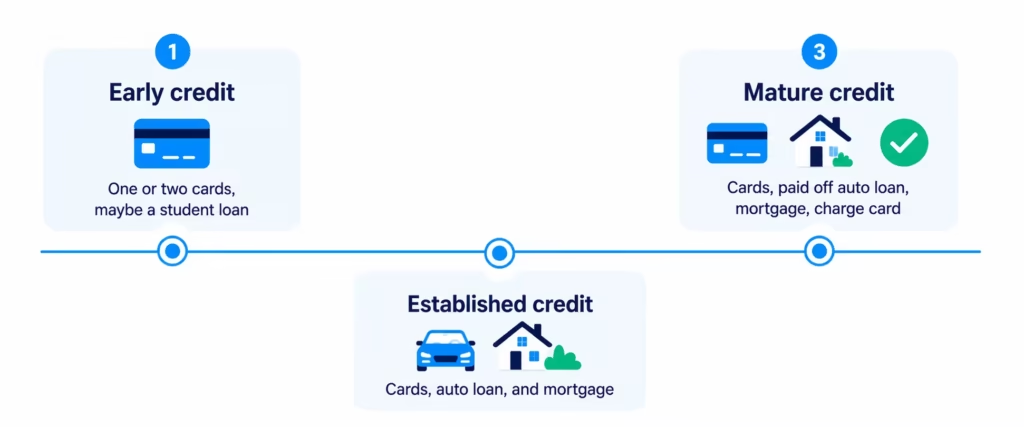
The key is variety across categories, not the total number of accounts. Ten credit cards and nothing else is still a thin mix. One card plus one auto loan is a real mix.
How Credit Mix Naturally Evolves Over Time
If your report looks thin right now, that’s often just a stage, not a mistake. Most people don’t set out to build a diverse credit portfolio on purpose. It happens on its own.
You buy a car and add an auto loan. You buy a home and add a mortgage. You take out a small personal loan for a home project. Each of these life events naturally adds a new type of account to your file. The credit account variety grows with you.
That’s why financial experts rarely tell young adults to force it. If you’re 22 and have one credit card in good standing, your mix will fill in as your life fills in. You don’t need to speed it up.
💡 Pro Tip: If you’re within 6 months of applying for a mortgage, don’t open any new accounts, even for the sake of mix. New credit inquiries and fresh accounts can lower your score temporarily and raise flags for underwriters.
Should You Open New Credit Just to Improve Your Mix?
The short answer: no, not as a standalone strategy.
Opening a loan or card just to add variety usually costs more than it helps. Here’s why:
- A hard inquiry hits your report and can knock 5 to 10 points off your score for up to a year.
- Any new account shortens your average age of accounts, which affects a bigger factor (length of history at 15%).
- If you take out a loan, you’re now paying interest and fees for a benefit that might raise your score by only a handful of points.
The math rarely works out. A hard inquiry plus a lower account age can easily wipe out the small mix boost you were hoping for.
The one time it makes sense is when you were already planning to borrow. If you’re about to buy a car or refinance, and it happens to add installment credit to a report full of cards, that’s a natural win. You’re not opening the account for mix; you’re opening it because you needed it.
A Simple Way to Decide
Use this quick framework before opening anything new:
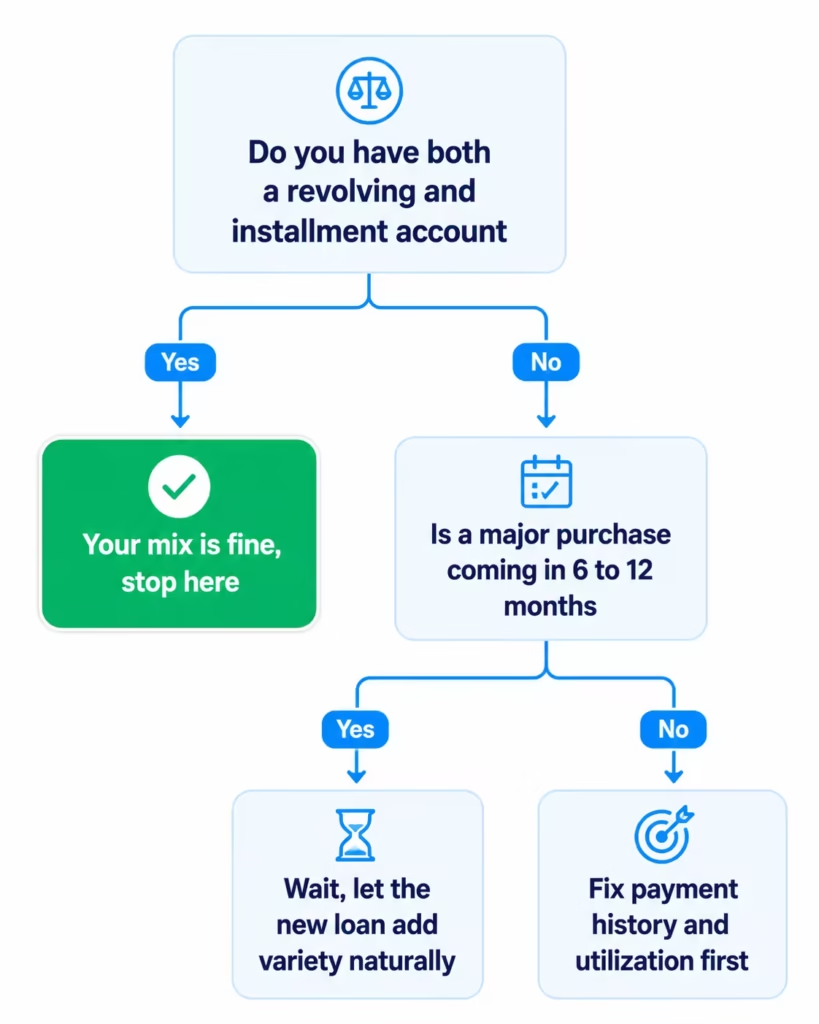
- Do you already have both a revolving and an installment account? If yes, stop. Your mix is fine.
- Do you have a major purchase (car, home) coming up in the next 6 to 12 months? If yes, wait and let that new loan add the variety naturally.
- Is your real score problem payment history or high utilization? If yes, fix those first. They’ll move your score far more than mix ever will.
- Are you being pressured to open a card just to boost mix? Skip it. The score gain is usually 5 to 15 points at most, which isn’t worth new debt or a hard inquiry.
⚠️ Mistake to Avoid: Applying for a personal loan you don’t need just to “add installment credit.” The interest costs alone often outweigh any score benefit, and the hard inquiry can lower your score before the new account starts helping.
How to Check Your Own Credit Mix
You can see your mix in two easy ways.
Option 1: Check your credit report directly. You can pull a free copy from all three bureaus (Experian, Equifax, TransUnion) once a week at AnnualCreditReport.com, the only federally authorized source for free reports. Look at the “Accounts” section. Each account will be labeled as “Revolving,” “Installment,” or “Open.”
Option 2: Use a free score app. Most tools like Credit Karma, Experian, or your bank’s app have a “Credit Mix” or “Types of Credit” section. It usually shows a small chart with how many of each type you have, along with a rating (excellent, good, fair, or poor).
Once you’re looking at the list, do a quick self-check:
- How many revolving accounts do you have?
- How many installment accounts?
- Any open credit accounts?
- Are you missing an entire category?
If you have just one category, your mix is thin. If you have two, you’re in solid shape. Three is a strong, well-rounded profile.
Common Mistakes People Make With Credit Mix
Even after understanding all of this, there are a few missteps that show up again and again. Watch out for these:
- Overestimating how much mix matters. At only 10% of your FICO Score, it’s the last thing to worry about if your payment history or utilization needs work. Fixing a late payment habit will move the needle far more.
- Opening accounts you don’t need just to add variety. A new loan or card brings a hard inquiry, potential debt, and a lower average account age. The tiny mix boost rarely covers those costs.
- Assuming rent, utilities, or subscriptions count. They usually don’t unless a special reporting service is involved, and even then they typically feed payment history, not mix.
- Closing old accounts without thinking. Closing your oldest credit card can shrink your mix, drop your average account age, and raise your credit utilization all at once. If a card has no annual fee, it’s often better to keep it open and use it occasionally.
- Chasing a “perfect” mix. There’s no magic combination. A steady, on-time record with two or three account types is more than enough for excellent scores.
Frequently Asked Questions (FAQs)
What is a good credit mix?
A good credit mix means having at least one revolving account, like a credit card, and one installment account, like an auto loan or mortgage. Two categories are considered solid, and three is a strong, well-rounded profile.
How do I improve my credit mix?
The safest way is to let it grow naturally through purchases you already need, like a car loan or mortgage. Opening a new account purely to add variety usually isn’t worth it since a hard inquiry can cost 5 to 10 points.
What is the biggest killer of credit scores?
Missing payments do the most damage, since payment history makes up 35% of your FICO Score. A single missed payment can drop your score by 60 to 100 points, far more than a thin credit mix ever would.
Is a good credit mix that important for your score?
Not really. Credit mix accounts for only 10% of your FICO Score and roughly 20% of VantageScore’s “depth of credit” category, which it shares with account age. Payment history and utilization together make up 65%, so those matter far more.
What is the best credit mix to have?
There’s no single perfect combination, but a mature profile with cards, an auto loan, a mortgage, and possibly a charge card covers all three categories. Variety across revolving, installment, and open credit matters more than the number of accounts.
Should I close old credit cards to simplify my accounts?
No, closing an old card can shrink your mix, lower your average account age, and raise your utilization all at once. If the card has no annual fee, keeping it open with occasional use is usually the better move.
Does Buy Now, Pay Later count toward credit mix?
Usually not. Short “pay in four” plans from services like Klarna or Afterpay typically aren’t reported to credit bureaus, though some longer BNPL loans do report and can count as installment credit.
Can opening too many accounts at once hurt my mix strategy?
Yes, each new account triggers a hard inquiry and lowers your average account age, which affects the 15% length-of-history factor. Opening several accounts just for variety usually costs more in points than the mix boost gains you.
Wrapping Up
Credit mix is one small piece of a much bigger picture. It counts for 10% of your FICO Score and about 20% of your VantageScore’s depth of credit category, but it rarely decides whether you get approved for a loan. Payment history and credit utilization matter far more, and a thin mix usually fills out on its own as major life purchases happen.
Based on the evidence in this guide, the most effective approach is to focus on paying every bill on time and keeping balances low, then let your mix grow naturally over time.
If you know a friend or family member stressing about their score before a mortgage or car loan, share this guide with them; it could save them from opening an account they don’t actually need.