
Seeing a late payment from Edfinancial on your credit report can feel like a gut punch. You know that missed payment doesn’t show your true character as a borrower. Maybe a job loss, a medical bill, or a messy servicer transfer pushed one payment past due, and now that single mark is blocking a mortgage or a car loan.
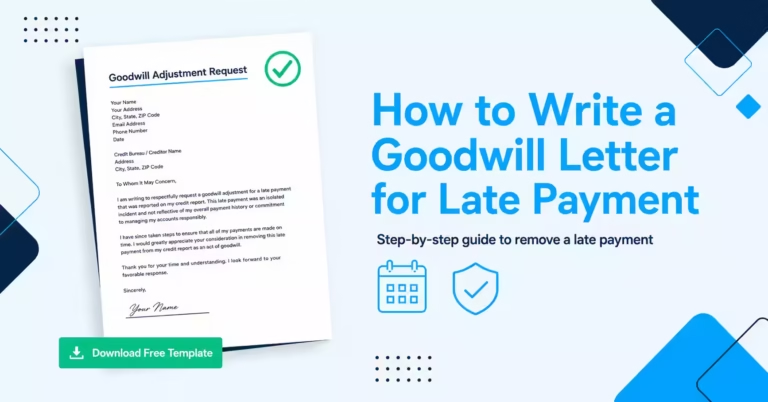
A goodwill letter to Edfinancial is a polite written request asking the servicer to remove the late payment from your credit report as a one-time courtesy.
In this guide, we’ll walk you through the exact steps, share a proven template, and show you what to do if the first try doesn’t work.
Key Takeaways
This guide explains how to write a goodwill letter to Edfinancial, including when to use one instead of a dispute, what to include, where to send it, and what to do if it’s denied.
Core Facts:
- A goodwill letter asks Edfinancial to remove an accurate late payment as a discretionary, one-time courtesy, while a credit dispute is used only when the late payment information is actually wrong.
- Goodwill letters should be 250 to 400 words, kept to one page, and mailed to Edfinancial Services, P.O. Box 36008, Knoxville, TN 37930, not the payment address.
- Most borrowers receive a response within 30 to 60 days of mailing, with secure online messages sometimes answered in 2 to 4 weeks.
- If approved, Edfinancial updates the tradeline with each credit bureau, and bureaus usually reflect the change within 30 to 45 days.
- If denied, the article recommends waiting 60 to 90 days before sending a follow-up letter, and stopping after three total attempts if all are refused.
- A single 30-day late payment can drop a credit score by 60 to 110 points, and late payment marks fall off a credit report seven years after the delinquency date.
Best for:
- Borrowers with one late payment on an otherwise clean Edfinancial payment history who want it removed before a mortgage or auto loan application.
- Readers who have confirmed the late payment is accurate and are looking for the correct request type, letter structure, and mailing address.
- Borrowers who received a prior denial and need guidance on timing and tone for a follow-up request.
Does Edfinancial Actually Remove Late Payments With a Goodwill Letter?
Yes, Edfinancial can remove a late payment, but the outcome is not guaranteed. A goodwill adjustment request is fully discretionary, which means the servicer chooses whether to help you or not. No law forces them to act.
Federal student loan servicers like Edfinancial follow rules set by the Department of Education. They must report your payment history accurately to the credit bureaus under the Fair Credit Reporting Act. If your late payment really happened, the servicer has the right to keep it on your report. Still, they also have the right to update or remove it if they choose.
Success rates are mixed. Some borrowers get a positive answer within a few weeks. Others get a polite denial. Borrowers with only one late payment, a long clean history, and a real hardship story tend to see better results. Repeat late payers or people with several missed months face a tougher road.
The servicer discretion policy at Edfinancial is not published in one clear place. That means the review is done case by case. A well-written, calm, and honest letter gives you the best shot.
📌 Did You Know: A single 30-day late payment can drop a strong credit score by 60 to 110 points. That is why even one removed mark can matter so much.
Goodwill Letter vs. Credit Dispute, Which One You Need
Picking the wrong tool is one of the most common mistakes. A goodwill letter and a credit dispute are not the same thing, and using the wrong one wastes time.
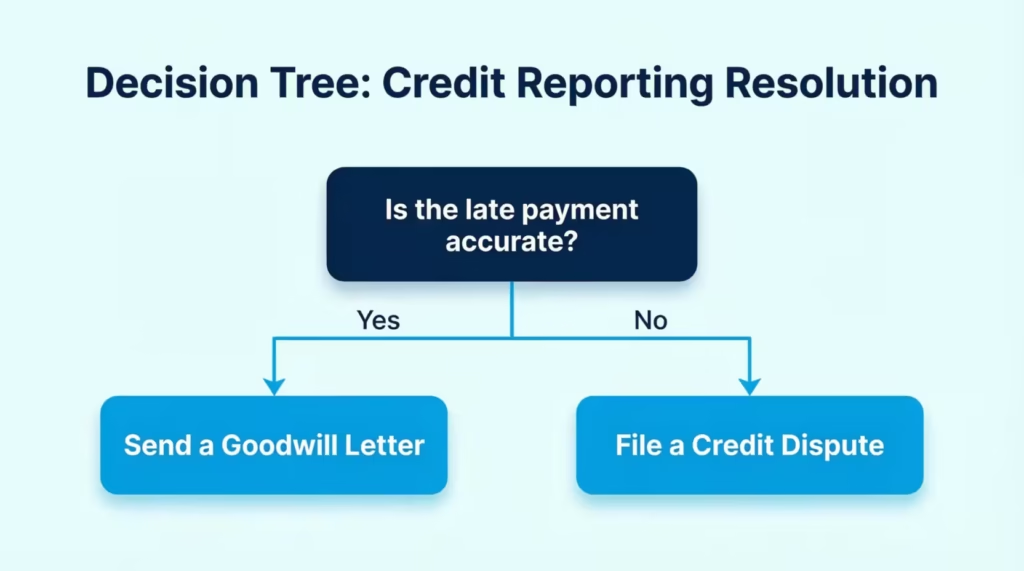
Ask yourself one simple question: Is the late payment on my report accurate?
- If yes, the payment really was late, use a goodwill letter. You are asking Edfinancial for a favor, not correcting an error.
- If no, the payment was made on time or the date is wrong, use a credit report dispute. You are asking the credit bureau or the servicer to fix a mistake under the Fair Credit Reporting Act.
The Fair Credit Reporting Act gives you the right to challenge any wrong item on your credit report. The Consumer Financial Protection Bureau says that inaccurate marks must be investigated within 30 days. A dispute is a legal process. A goodwill request is a personal appeal.
Mixing the two hurts your case. If you send a goodwill letter for an item that is actually wrong, you may lose your legal right to remove it fast. If you send a dispute for a late payment that really happened, the credit bureau will confirm it as accurate, and it will stay on your report.
⚠️ Mistake to Avoid: Never file a dispute just because you don’t like the late mark. If the payment was truly late, disputing it can freeze your goodwill options and leave the item locked in place.
Preparing to Write Your Edfinancial Goodwill Letter
Before you write a single word, gather your paperwork. A prepared letter feels credible. A rushed letter feels weak.
Collect these items first:
- Your Edfinancial account number reference, found in your online dashboard or on any billing statement.
- The exact date or dates the late payment posted.
- A recent copy of your credit report from AnnualCreditReport.com, which is the only federally approved free source.
- Proof of your hardship if you have it, such as a layoff notice, hospital bill, or forbearance denial letter.
- Your full legal name, current address, phone number, and email as they appear on the loan.
Next, double-check the credit report late payment mark. Note which bureau is reporting it, Equifax, Experian, or TransUnion, and confirm the month and year. If the mark shows on only one bureau, mention that in your letter. If it shows on all three, ask for late payment removal across all three.
Also review your payment history for the past two years. Servicers often reward borrowers who paid on time before and after the slip. A clean track record before the miss and steady payments after it strengthen your case.
Handling Multiple Late Payments in One Letter
If you have more than one late mark, decide up front how to frame the request. There are two workable paths.
The first path is a single combined letter that covers every late payment tied to the same hardship. For example, if a three-month medical leave caused three back-to-back missed payments, group them together and tell one clear story.
The second path is separate letters for late payments that came from different causes. If one late mark came from a servicer transfer error and another came from a job loss two years later, split them into two letters. Mixing unrelated causes in one request confuses the reader and weakens both stories.
Do not ask for removal of five or six late marks spread across many years. That signals a pattern, not a one-time slip, and Edfinancial is far less likely to help.
How to Structure Your Goodwill Letter
A strong goodwill letter Edfinancial sample follows a simple three-part shape: opening, body, and closing. Keep it clear, calm, and short. One page is the sweet spot.
The opening states who you are and why you are writing. Give your name, your Edfinancial account number, and one line about the late mark you want removed. Do not bury the ask.
The body tells your story. Explain the hardship in plain words. Share what changed, how you fixed it, and why the account has stayed current since. Take responsibility. Do not blame the servicer, the bureau, or your family.
The closing makes the request and thanks the reader. Ask directly for the payment history correction. Confirm your current contact details. Sign the letter by hand if you are mailing it.
When you write a goodwill letter to a student loan servicer, remember that a real person reads it. Keep the tone respectful, not desperate. Show, don’t shout.
What to Include (Account Number, Dates, Hardship Explanation)
Every strong letter contains the same core facts. Missing one of them gives the reviewer a reason to set your request aside.
Include these items in order:
- Your full legal name and mailing address at the top.
- Today’s date.
- Edfinancial’s mailing address.
- A clear subject line, such as “Goodwill Adjustment Request, Account #XXXXXXXX.”
- Your account number reference, spelled out fully.
- The exact date or dates of the late payment.
- A short, honest hardship explanation; two to four sentences is enough.
- Proof that the hardship is over and payments are current.
- A direct ask for removal from Equifax, Experian, and TransUnion.
- Your signature, phone number, and email.
Attach copies, never originals, of any supporting proof. A one-page hospital bill, a layoff letter, or a forbearance denial can turn a good letter into a strong one.
Tone and Length Guidelines
Tone is where most letters go wrong. Angry letters get ignored. Long letters get skimmed. Whiny letters get denied.
Aim for a calm, adult, thankful tone. Think of it as a note to a busy manager who is doing you a favor, not a legal filing.
Keep the letter between 250 and 400 words. Use short paragraphs of two to four sentences. Avoid legal threats, ALL CAPS, and phrases like “you owe me” or “this is unfair.” Never mention lawyers, the CFPB, or a lawsuit in a goodwill request. Those belong in a dispute, not a favor.
💡 Pro Tip: Read the letter out loud before sending it. If any sentence sounds bitter or defensive, rewrite it. A friendly voice wins more removals than a perfect argument.
Common Mistakes That Get Goodwill Letters Rejected
Most denied letters share the same handful of errors. Avoiding them puts you ahead of the pack.
- Sending anger, not a request. Servicer staff are people. Rude letters go to the bottom of the pile.
- Writing three pages of backstory. Two to four sentences of hardship is enough.
- Sending it to the wrong address. A goodwill letter template mailed to a payment lockbox rarely reaches the right desk.
- Asking for removal of a late payment that is actually accurate and recent, within the past 60 days. Servicers rarely act that fast.
- Denying the late payment happened. That turns your goodwill request into a dispute and kills the appeal.
- Mixing a goodwill ask with a legal threat. The two do not belong in the same letter.
- Sending the same letter over and over. Repeat requests in the same month look pushy and hurt your case.
- Forgetting to sign or date the letter. A missing signature can send it straight to the shredder.
A quick self-check before mailing saves a lot of pain. Read the servicer discretion policy language back to yourself: you are asking, not demanding.
Sample Goodwill Letter for Edfinancial
Use this Edfinancial goodwill letter template as a starting point. Swap in your own facts. Do not copy it word for word, since reviewers can spot a canned letter fast.
[Your Full Name] [Your Street Address] [City, State ZIP] [Phone] | [Email]
[Today’s Date]
Edfinancial Services P.O. Box 36008 Knoxville, TN 37930
Subject: Goodwill Adjustment Request, Account #XXXXXXXX
Dear Edfinancial Customer Care Team,
My name is [Your Name], and I have been a borrower with Edfinancial since [Year]. I am writing to respectfully ask for a goodwill adjustment on one late payment reported on my account, dated [Month/Year].
At that time, I went through [brief hardship, one to two sentences, for example: a sudden job loss after my employer closed its regional office]. The gap in income made it hard to keep every bill current, and one payment to Edfinancial slipped past its due date. I take full responsibility for the miss.
Since then, my situation has fully recovered. I have made every payment on time for [number] straight months, and I plan to keep it that way through the life of the loan. My overall history with Edfinancial shows a clear pattern of on-time payments outside of that single hardship.
I understand that a goodwill adjustment is fully at your discretion. If you are willing to remove the late payment from Equifax, Experian, and TransUnion as a one-time courtesy, it would help me qualify for [specific goal, such as a mortgage or auto loan] and move forward.
Thank you for taking the time to read my request and for the service you have provided over the years.
Sincerely,
[Handwritten Signature] [Printed Name] [Account Number]
Keep a copy for your records. Save the mailing receipt if you send it certified.
Where to Send Your Goodwill Letter to Edfinancial
The right Edfinancial goodwill letter address matters. Sending it to a payment lockbox almost guarantees it never reaches a decision maker.
Use the general correspondence address for Edfinancial Services, not the payment mailing address:
Edfinancial Services P.O. Box 36008 Knoxville, TN 37930
You have three main delivery options:
- Certified mail request with return receipt. This is the strongest option. You get proof the letter arrived and the name of the person who signed for it. The cost is around eight dollars at USPS.
- Standard first class mail. Cheaper, but you get no proof of delivery.
- Secure message through your online account. Log in at edfinancial.studentaid.gov, open the message center, and paste the letter into a new secure message. This creates a time-stamped record inside your account.
Fax and email are not recommended for goodwill letters. A signed paper letter carries more weight than an emailed PDF.
Whichever channel you pick, keep a full copy of the letter, all attachments, and any tracking or confirmation numbers. You will need them if you follow up later.
How Edfinancial’s Forbearance and Deferment Policy Affects Your Late Payment
Many borrowers hope that a retroactive forbearance or deferment will erase a late mark. It usually does not. Understanding this rule up front saves you a lot of wasted effort.
Forbearance pauses your monthly payments for a set period, but interest may keep growing. Deferment also pauses payments, and for some loan types the government pays the interest. Both tools protect your account going forward. Neither is designed to rewrite past history.
If Edfinancial approves a retroactive forbearance or deferment that covers the month a payment was missed, the account status for that month may be updated. In some cases, the late payment mark can be adjusted or removed because the account was, in effect, not required to pay. This is not automatic. You must ask, in writing, and provide the exact months you want covered.
You can more easily get retroactive relief for specific hardships. These include active military service, cancer treatment, or federally declared disasters. For a plain financial hardship, servicers are far more cautious. The Federal Student Aid office lists the current forbearance categories and time limits.
Rehabilitation vs goodwill is a different track and often confused with this one. Loan rehabilitation is a formal program for defaulted federal loans that removes the default status after nine on-time payments. It is not a tool for a single late mark on a loan that never went into default.
Bottom line: try forbearance or deferment retroactively only when your missed month clearly matches an official hardship category. Otherwise, a plain goodwill letter is the better path.
What Happens After You Send the Letter
The waiting stage is where most borrowers get anxious. Knowing the timeline in advance keeps you calm and ready to act.
After the letter arrives, Edfinancial logs it, routes it to a review team, and reads your account history. Reviewers look at how long you have been a customer, how the late payment happened, and how the account has behaved since. They then send an answer by mail, secure message, or both.
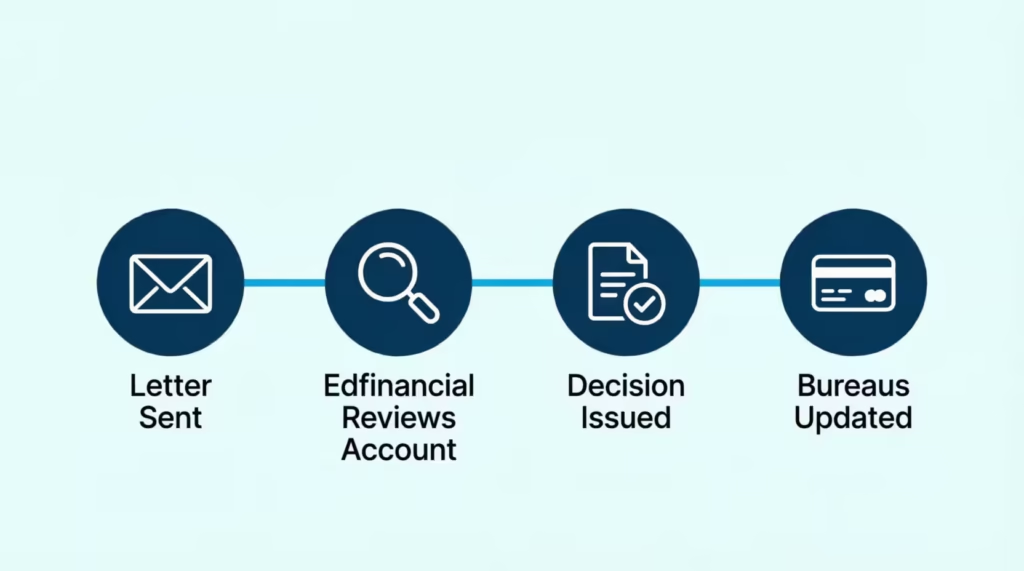
If the answer is yes, Edfinancial updates the tradeline with each credit bureau where the late mark appears. Bureaus usually reflect the change within 30 to 45 days. Your score often bumps up within one or two billing cycles.
A rapid rescore is a separate mortgage lender tool, not something Edfinancial runs. If you are mid-mortgage application, ask your lender to request a rapid rescore from the credit bureau after Edfinancial confirms the removal. The lender pays a small fee and gets an updated score in three to seven days.
How Long Edfinancial Takes to Respond
Most borrowers hear back from Edfinancial within 30 to 60 days of mailing the letter. Secure messages sometimes get a faster reply, often in two to four weeks.
If you have not heard anything after 60 days, send one short follow-up. Reference the original letter date and your account number. Do not resend the full request yet.
What to Do If Edfinancial Denies Your Request
A denial is not the end. It is a checkpoint.
First, read the denial carefully. If they explain why, use that reason to shape your next move. If the denial says the late payment is accurate, that only confirms a goodwill path, not a dispute.
Second, wait 60 to 90 days before trying again. A fresh request too soon looks like pressure. Use the gap to build more on time payments, which strengthens the story.
Third, escalate politely. Ask to have the request reviewed by a supervisor or the office of the consumer advocate. Do not threaten. Do not file a CFPB complaint unless you truly believe Edfinancial broke the law, since that shuts the goodwill door for good.
Following Up or Sending a Second Request
A second request works best when something has changed. Maybe you paid the loan down, hit a new milestone of on-time payments, or gathered fresh proof of the original hardship.
In your follow-up letter:
- Reference the first letter by date.
- Add the new fact or new proof.
- Keep the tone even more grateful and calm than the first time.
- Ask one more time for the specific removal, from all three bureaus.
Two well-spaced, well-written requests are far more effective than five short angry ones. Space them 60 to 90 days apart, and stop after three tries if the answers keep coming back as no. At that point, focus on time. Late payments disappear from your credit report seven years after the original delinquency date. The effect on your score lessens even sooner.
Frequently Asked Questions (FAQs)
Does Edfinancial accept goodwill letters?
Yes, Edfinancial can accept and consider goodwill letters, but approval is fully discretionary. Borrowers with one late payment and a long clean history tend to see better results than repeat late payers.
Will Edfinancial remove late payments?
Edfinancial can remove a late payment as a one-time courtesy, but there’s no guarantee. Some borrowers get approved within weeks while others receive a polite denial, depending on their payment history.
Who do I send my goodwill letter to?
Send your letter to Edfinancial Services, P.O. Box 36008, Knoxville, TN 37930, using the general correspondence address rather than the payment lockbox. Certified mail with return receipt is the strongest delivery option.
Is a goodwill letter considered a dispute?
No, a goodwill letter and a credit dispute are different tools. Use a goodwill letter when the late payment is accurate, and you’re asking for a favor; use a dispute only when the payment info is actually wrong.
What is an example of a goodwill letter?
A strong example opens with your name and account number, explains a brief hardship in two to four sentences, and shows your on-time payment history since. The article includes a full sample template addressed to Edfinancial’s Knoxville, TN office.
How do I write a goodwill letter?
Structure it in three parts: an opening stating who you are and your request, a body explaining your hardship briefly, and a closing that directly asks for removal and thanks the reader. Keep it to 250-400 words on one page.
Can I email a goodwill letter?
Fax and email are not recommended for goodwill letters. A signed paper letter sent by certified mail, or a secure message through your Edfinancial online account, carries more weight than an emailed PDF.
How long does a goodwill letter take to process?
Most borrowers hear back within 30 to 60 days of mailing their letter. Secure messages sent through the online account sometimes get a faster reply, often in two to four weeks.
What happens after writing a goodwill letter?
Edfinancial logs the letter, routes it to a review team, and checks your account history before responding by mail or secure message. If approved, bureaus usually reflect the change within 30 to 45 days.
Do student loans go away after 7 years?
The loan itself doesn’t disappear, but a late payment mark drops off your credit report seven years after the original delinquency date. The negative effect on your credit score fades even sooner than that.
What should I do if Edfinancial denies my goodwill request?
Read the denial reason, wait 60 to 90 days before trying again, and use that time to build more on-time payments. You can also politely ask for supervisor review, but avoid CFPB complaints unless you believe an actual law was broken.
The Bottom Line
Removing a late payment from Edfinancial takes patience, honesty, and a well-built letter. Confirm the mark is accurate, pick a goodwill request over a dispute, gather your account details, and write a calm one-page appeal that tells your hardship story and shows a clean track record since.
The best way to proceed is to send a certified mail letter to the main address. If needed, follow up politely 60 to 90 days later.
If you know a friend or family member with a late mark on their student loan, please share this guide on social media. A clear letter could help them get their next mortgage approved.