
I get why this question keeps you up at night. You used EarnIn to bridge a tight paycheck, and now you’re wondering if that small advance is quietly damaging your credit report right before you apply for an apartment, a car loan, or a new credit card. The confusion is real, especially since EarnIn credit bureau reporting works very differently depending on which EarnIn product you use.
Here’s the short answer: EarnIn Cash Out advances aren’t reported to credit bureaus. However, the EarnIn Card does report your activity to all three bureaus each month.
Below you’ll learn what happens if you don’t repay, whether signing up triggers a credit check, and easy steps to protect or boost your score.
Key Takeaways
This guide explains whether EarnIn reports to credit bureaus, covering the difference between EarnIn Cash Out and the EarnIn Card, credit check policy at signup, what happens if you miss a repayment, and how to build credit using the Card.
Core Facts:
- EarnIn Cash Out advances are never reported to Equifax, Experian, or TransUnion, regardless of whether repayment is on time or delayed.
- The EarnIn Card reports account status, balance activity, and payment history to all three bureaus on a monthly cycle.
- Signing up for EarnIn Cash Out does not involve a hard or soft credit inquiry, since eligibility is based on income deposits and bank activity, not credit history.
- Payment history accounts for 35 percent of a FICO Score, making on-time EarnIn Card payments the most effective way to use EarnIn for credit building.
- Missing a Cash Out repayment triggers automatic bank debit attempts, potential overdraft fees, and an account hold, but not third-party debt collection or bureau reporting.
- A charged-off EarnIn Card balance can be reported as a serious delinquency, unlike a missed Cash Out repayment, which carries no direct credit report risk.
Best for:
- Readers who used EarnIn Cash Out and are worried it already affected their credit score.
- Readers deciding whether to use the EarnIn Card specifically to build credit history.
- Readers who missed a repayment and want to understand the real consequences before assuming credit bureau reporting is involved.
Is EarnIn a Loan? Why Its Classification Matters for Credit Reporting
EarnIn isn’t a loan company, and that single fact drives everything about how it interacts with your credit file. EarnIn is a fintech app that offers earned wage access (EWA). That means you’re pulling out money you’ve already worked for, not borrowing money from a lender. Banking services for the app are handled through Evolve Bank & Trust, which is EarnIn’s partner bank.
Because a Cash Out is an advance on wages you’ve already earned, it isn’t structured as a debt under standard lending rules. There’s no interest rate, no fixed loan term, and no formal repayment contract in the traditional sense. So EarnIn has no obligation to report your Cash Out activity to Equifax, Experian, or TransUnion, and it doesn’t.
This is very different from a wage advance vs payday loan setup. A payday loan is a legally recognized loan, so lenders can (and sometimes do) report it. EWA products like EarnIn Cash Out sit outside that framework. That’s why your Cash Out history stays completely off your credit report.
Does EarnIn Cash Out Report to Credit Bureaus?
No. Standard EarnIn Cash Out advances are not reported to Equifax, Experian, or TransUnion. Nothing about your Cash Out shows up on your credit report, whether you take one advance a month or use it every pay period.
This rule holds whether you repay on time or your repayment gets delayed. EarnIn’s own help center and Cash Out product page confirm there is no credit check and no reporting tied to Cash Out. So the EarnIn Cash Out credit impact on your score is zero in either direction. It won’t hurt you, and it also won’t help you.
That means you can stop refreshing your credit app looking for a mystery entry. A Cash Out simply won’t appear on your credit report.
💡 Pro Tip: If you see a strange entry on your credit report and you’ve only used EarnIn Cash Out, it’s not from EarnIn. Look for a different account (a bank overdraft, an old collection, or an ID-theft issue) before you panic.
Does the EarnIn Card Report to Credit Bureaus?
Yes. The EarnIn Card is a separate product, and its activity is reported to all three major credit bureaus. The company sends account details to Equifax, TransUnion, and Experian.
What gets reported is standard credit-account information. That includes your account status, your balance activity, and your payment history month by month. So on-time payments can help your file, and missed payments can hurt it, just like any other reported credit account.
Reporting happens on a monthly cycle, not in real time. Expect a lag of a few weeks between when you make a payment and when it appears on your report. Don’t stress if you pay today and your report looks the same tomorrow. Give it a full billing cycle to update.
Cash Out vs. EarnIn Card: Key Reporting Differences
Here’s a fast side-by-side so you can figure out which product actually applies to you.
| Feature | EarnIn Cash Out | EarnIn Card |
|---|---|---|
| Reports to credit bureaus | No, never | Yes, all three bureaus |
| Reporting frequency | None | Monthly |
| Can help build credit | No | Yes, with on-time payments |
| Can hurt credit | No | Yes, if payments are late |
| Credit check at signup | No | See next section |
If you’re just tapping the app to pull a portion of your paycheck early, you’re using Cash Out. If you swipe a physical or virtual EarnIn-branded card at stores, you’re using the EarnIn Card, and that one does show up on your report.
Does Signing Up for EarnIn Trigger a Credit Check?
No. Creating an EarnIn account and using Cash Out does not involve a hard or soft credit inquiry. EarnIn doesn’t use your credit score or credit report to decide if you qualify. Instead, the app checks your income deposits and bank activity to confirm you’ve earned wages you can pull forward.
That’s a big deal if you’re rebuilding credit. Some apps run a soft pull that shows up on your report (soft pulls don’t affect your score, but they’re visible to you). EarnIn skips that step for Cash Out. So no EarnIn credit check takes place when you sign up.
The EarnIn Card is a bit different since it’s a credit-style product. Enrollment terms may include a review of your account and financial data. However, signing up for standard Cash Out won’t lead to a hard credit inquiry on your file.
Can Using EarnIn Hurt Your Credit Score?
For Cash Out, no. Nothing about a Cash Out advance is reported, so it can’t hurt your score directly. Even a delayed repayment won’t post as a missed payment on your credit file.
For the EarnIn Card, yes, it can. Since Card activity is reported monthly, a late or missed payment will appear on your file the same way any other credit card late payment would. That could drop your score, especially if it’s your only reported account.
But here’s the critical point many articles miss: “not reported” doesn’t mean “no consequences.” A missed Cash Out repayment can still cause real problems, like bank overdraft fees or losing access to future advances. Those problems just don’t land on your credit report. We’ll walk through that chain in a later section.
Can Using EarnIn Help Build Your Credit Score?
Cash Out cannot help you build credit. Since it isn’t reported, none of your on-time repayments count toward your credit history. Using Cash Out ten times a month with perfect repayment won’t move your score by a single point.
The EarnIn Card can help, and this is where it gets interesting. On-time payments are reported monthly, which builds positive payment history. That matters because payment history is the biggest factor in your FICO Score. It accounts for 35% of your total FICO Score, the largest single category.
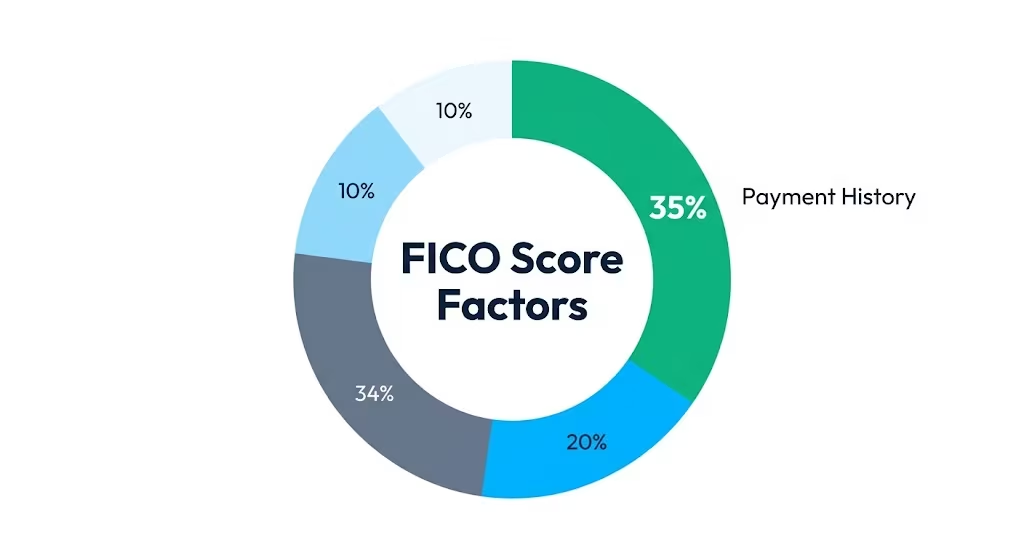
Just set realistic expectations. Only the Card side of EarnIn helps your file, and only if you pay on time every cycle. Turning on autopay is the simplest way to lock that in. If you want a true credit builder card effect from EarnIn, you have to use the Card, not the Cash Out feature.
What Happens If You Don’t Repay an EarnIn Advance?
This is the piece most people miss. If you don’t repay a Cash Out, EarnIn won’t send it to the credit bureaus, but a chain of events still starts. Here’s the step-by-step sequence to expect.
Step 1 — Automatic debit attempts begin. On your next payday, EarnIn will try to pull the Cash Out amount from your linked bank account through auto-debit repayment. If the money isn’t there, the system may retry over the coming days.
Step 2 — Your bank may charge overdraft fees. If EarnIn’s debit hits an account with too little money, your bank could charge overdraft fees or non-sufficient funds (NSF) fees. Those fees come from your bank, not from EarnIn, but they hurt your wallet all the same. EarnIn’s Balance Shield tool is designed to help avoid this, but it isn’t foolproof.
Step 3 — Your EarnIn account is placed on hold. Until you repay the outstanding advance, you lose access to new Cash Outs. That’s an account restriction, not a credit action. It’s a lock inside the app.
Step 4 — Your banking history could take a hit. Repeated overdrafts can show up in banking-history databases like ChexSystems, which some banks check before opening new accounts. That’s separate from your credit report, but it can still limit your options later.
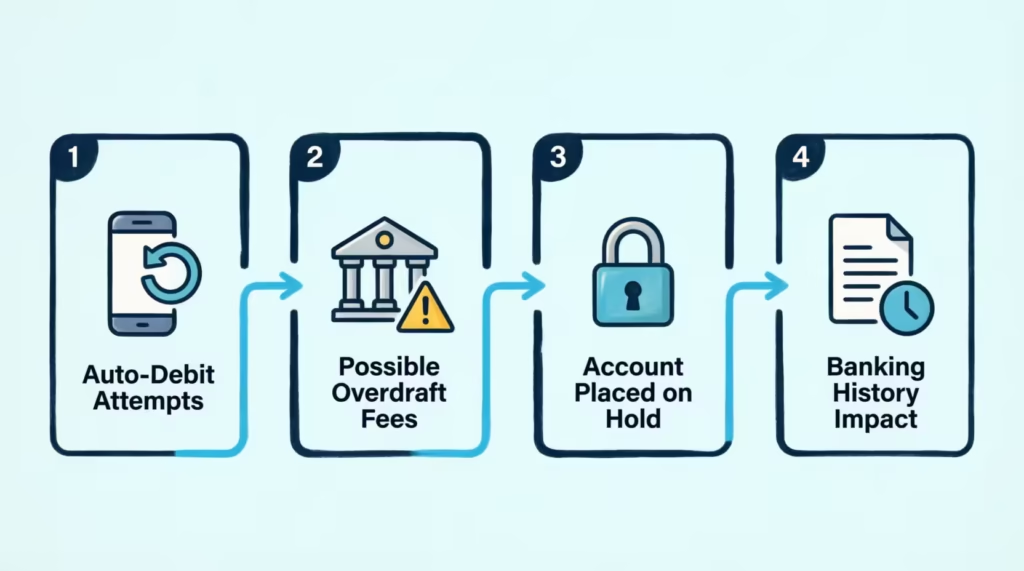
None of these steps involve a mark on your credit report from EarnIn itself. But the ripple effects on your bank account and access to future advances are real.
Does EarnIn Send Accounts to Collections?
No, not for standard Cash Out. EarnIn has publicly stated it does not use third-party debt collectors to chase unpaid Cash Out balances. The company’s stated philosophy is to avoid aggressive collection tactics that trap users in a debt cycle.
The EarnIn Card is treated differently because it’s a credit account. If a Card balance becomes seriously overdue, it could be managed using tools that credit issuers typically use. This may include charge-off reporting or later involvement from third-party collectors.
So the practical takeaway is simple. A missed Cash Out won’t send you to a collection agency. But a seriously overdue EarnIn Card balance could lead to a different outcome.
Can Non-Repayment Ever Indirectly Affect Your Credit?
Yes, in rare cases. Here are the edge scenarios worth knowing:
Charged-off EarnIn Card balance. If you stop paying an EarnIn Card, the account can be charged off and reported as a serious delinquency. That would definitely show up on your credit report.
A court judgment. In extreme, unusual cases, unpaid balances that end up in court can result in a judgment. Public records, such as judgments and liens, can impact your creditworthiness. This is true even if they don’t appear directly on your credit file.
Bundled financial hardship. Nonpayment can cause missed rent, unpaid utilities, or defaulted credit cards. These issues can show up on your credit report, even if EarnIn hasn’t reported anything.
The clean way to avoid all of this is to stay current, especially on the Card, and to give EarnIn a heads-up if you’re facing a hardship.
How to Build Credit Using the EarnIn Card
If your real goal is boosting your score, the Card is your tool. Here’s the action plan.
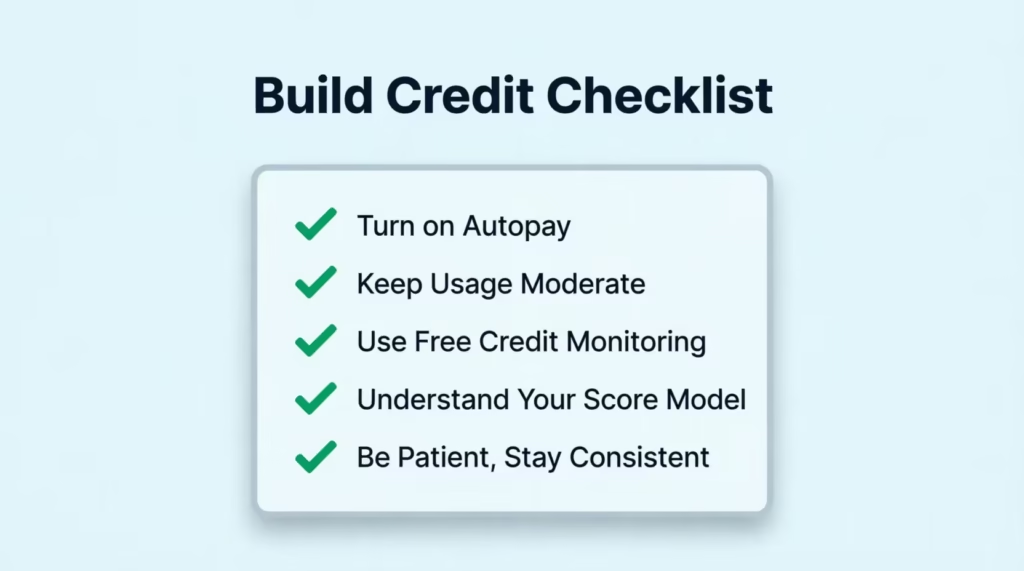
Turn on autopay. This is the single most important step. Payment history is 35% of your FICO Score, so a single missed payment can undo months of good behavior. Autopay guarantees you never forget.
Keep your usage moderate. Even though the Card works differently from a traditional credit card, keeping your reported balance modest helps your file look healthy. Try not to run it close to your limit.
Use EarnIn’s free Credit Monitoring. EarnIn offers a built-in Credit Monitoring tool that shows your VantageScore 3.0 from Experian. That gives you a quick pulse on how your score is trending without paying for a separate service.
Understand the score you see. Your VantageScore 3.0 is one common scoring model, but many lenders use FICO. The VantageScore vs FICO difference can be tens of points either way, so don’t panic if a lender sees a different number than your app.
Be patient. Credit building is gradual. Expect real movement over three to six months of consistent on-time behavior, not in a few days. It took time to lower your score, and it takes time to raise it.
📌 Did You Know: Opening a new credit account can lower your average account age for a short time. This might cause a small, temporary dip in your score until your on-time payments help it rise again.
EarnIn vs. Other Cash Advance Apps: Credit Reporting Compared
If you’re comparing apps mainly on how they treat your credit report, here’s how EarnIn stacks up.
| App | Cash advance reporting | Credit-builder product? |
|---|---|---|
| EarnIn (Cash Out) | Not reported | EarnIn Card reports to all three bureaus |
| Dave | Cash advances not reported to bureaus | Offers a credit-builder product option |
| Brigit | Cash advances not reported to bureaus | Offers optional credit-builder features |
| MoneyLion | Cash advances not reported to bureaus | Credit Builder Plus loan reports to bureaus |
The pattern is clear. Standard earned wage access (EWA) and cash advance features across these apps generally don’t touch your credit report. Where the apps differ is in their optional add-on products, like credit-builder loans or reporting cards.
If credit building is your true goal, a cash advance app isn’t the fastest path. A dedicated credit builder card or a secured credit card is usually more effective. This is especially true for credit reporting. They often outperform credit-builder add-ons from cash advance apps.
What to Do If You’re Worried EarnIn Already Affected Your Credit
If you’re anxious right now, take these three concrete steps to confirm what’s actually on your file.
Pull your free credit reports. Every consumer can get free weekly credit reports from all three bureaus through AnnualCreditReport.com, the only site officially authorized by federal law. Pull all three (Equifax, Experian, and TransUnion) so you can compare.
Look for actual EarnIn entries. A Cash Out will never appear on your report, so if you only used Cash Out, you won’t find “EarnIn” listed anywhere. If you also had the EarnIn Card, you may see an account listed under EarnIn or its partner bank name. Check the payment history line by line.
Dispute anything that looks wrong. If you see an entry you don’t recognise, act quickly. If there’s an error on your EarnIn Card, like a late payment that was on time, dispute it. Contact the bureau reporting the mistake. Each bureau has a free dispute process:
- Equifax: file a dispute through Equifax’s dispute portal
- Experian: file a dispute through Experian’s dispute center
- TransUnion: file a dispute through TransUnion’s dispute page
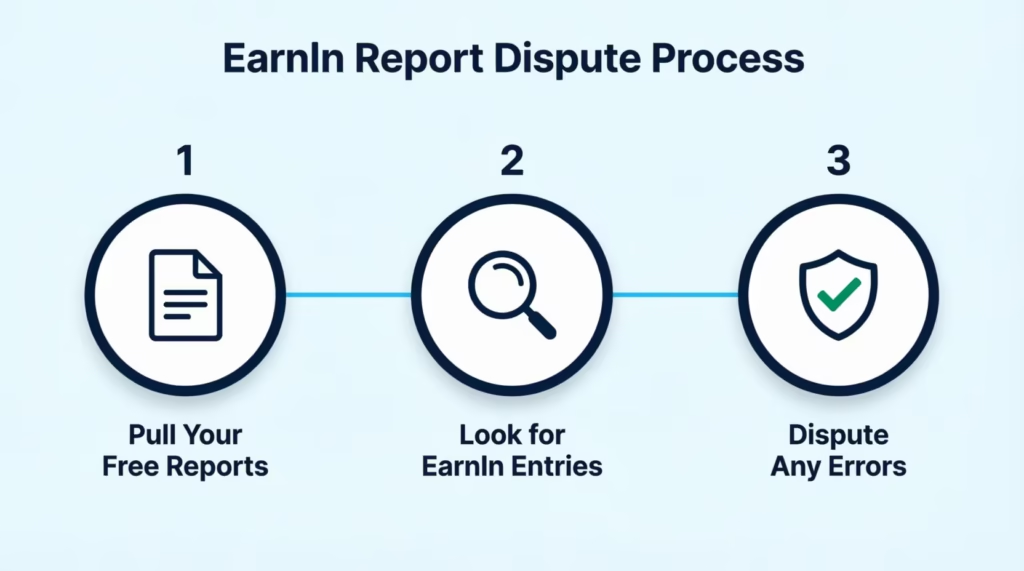
Bureaus are required to investigate disputes, usually within 30 days. If the item is inaccurate or can’t be verified, it must be removed or corrected.
⚠️ Mistake to Avoid: Don’t pay a third-party “credit repair” service to dispute EarnIn entries for you. You can do it yourself for free directly with the bureaus, and no service can legally remove accurate information faster than you can.
Frequently Asked Questions (FAQs)
Does EarnIn show up on a credit report?
Only if you use the EarnIn Card. Cash Out advances never appear on your credit report, but EarnIn Card account activity is reported to Equifax, Experian, and TransUnion every month.
Does EarnIn pull from your bank account?
Yes. EarnIn automatically debits your linked bank account on your next payday to collect the Cash Out amount, and it may retry the debit if the first attempt fails.
Do apps like EarnIn affect credit score?
Standard cash advance features from apps like EarnIn, Dave, and Brigit are not reported to credit bureaus, so they don’t affect your score either way. Optional credit-builder add-ons from these apps can affect your score.
Does EarnIn improve credit score?
Cash Out never improves your score since it isn’t reported anywhere. The EarnIn Card can improve your score over time if you make on-time payments every billing cycle.
What loans do not report to credit bureaus?
Earned wage access products like EarnIn Cash Out don’t report because they’re advances on wages you’ve already earned, not formal loans. Many payday loans and some private personal loans also skip bureau reporting.
Is the EarnIn card worth it?
It’s worth it if your goal is building credit, since it reports monthly and rewards on-time payments. It carries real risk too, since missed payments can hurt your score the same way a late payment on any credit account would.
What happens if you don’t pay EarnIn?
EarnIn will attempt repeated auto-debits from your bank account and place your account on hold until the balance is repaid. You won’t be sent to collections for a standard Cash Out, but you could face bank overdraft fees.
Will not paying back EarnIn affect your credit?
Not directly for Cash Out, since it’s never reported to the bureaus regardless of repayment. An unpaid EarnIn Card balance is different and can be charged off and reported as a serious delinquency.
Does using EarnIn Card lower your credit score if you already have good credit?
Opening a new EarnIn Card account can cause a small, temporary dip by lowering your average account age. On-time payments typically offset this within a few months.
Wrapping Up
The full picture is simpler than it feels at first. EarnIn Cash Out doesn’t affect your credit report. So, it won’t help or hurt your score directly. However, missed repayments can lead to overdraft fees and account restrictions. The EarnIn Card is the opposite: it reports monthly to all three bureaus, which means it can help you build credit with on-time payments or hurt you with late ones.
Since payment history makes up 35% of your FICO Score, the best way to improve it is to use autopay for your Card. Also, think of Cash Out as a short-term solution for wages.
If this guide helped you clear up the confusion, share it with a friend juggling cash advance apps. It could save them from a credit mistake they didn’t see coming.