
We’ve all been handed a shiny plastic card at some point and paused before using it. Maybe your employer gave you a payroll card, a family member gifted a Visa-branded card for your birthday, or your tax refund arrived on a piece of plastic instead of in your bank account. You’re staring at it, wondering, “Is this a debit card? A gift card? Something else?” That confusion is common, and understanding what a prepaid card is matters before you spend a single dollar.
A prepaid card is a payment card loaded with your own money in advance, letting you spend only what’s on it, with no bank account or credit line attached.
In this guide, you’ll learn how prepaid cards work, the fees to watch for, how they compare to debit and credit cards, and how to decide if one fits your needs.
Key Takeaways
This guide explains what a prepaid card is, including how it works, how it differs from debit and credit cards, common fees, and the FDIC and Regulation E protections that keep your funds and transactions safe.
Core Facts:
- A prepaid card holds money you’ve already loaded onto it, with no bank account or credit line attached, and stops working once the balance reaches zero.
- Three parties sit behind most prepaid cards: the card network sets acceptance rules, the issuing bank holds the FDIC-insured funds, and the program manager handles customer service.
- Prepaid cards do not report to Equifax, Experian, or TransUnion, so using one does not build or damage your credit score.
- Reloadable prepaid cards from major issuers are FDIC-insured up to $250,000 once the card is registered in the cardholder’s name.
- Reporting a lost or stolen card within two business days caps liability at $50 under Regulation E, while waiting up to 60 days caps it at $500.
- Cash reloads at retail locations commonly carry a fee between $3 and $6 per load, while direct deposit and bank transfers are usually free or low cost.
Best for:
- People who don’t have a bank account and need a way to receive pay or benefits.
- Readers who want strict spending discipline since prepaid cards generally can’t overdraft.
- Parents teaching a teen or family member how to budget with a fixed balance.
What a Prepaid Card Actually Is
A prepaid card is a plastic or virtual payment card that holds a set amount of money you’ve already added to it. You spend only what’s loaded on the card. Once the balance hits zero, the card stops working until you add more funds. There’s no bank account linked to it. There’s no line of credit either. The money on the card is your own, put there in advance.
You may see prepaid cards described using other terms. “Stored value card” is one common name, since the card literally stores a set value. “Reloadable prepaid card” is another, because you can add more money to most types over time. Some people mistakenly call it a “prepaid credit card,” but that name is misleading. There is no credit involved. You are not borrowing anything.
It’s also different from a one-time gift card in an important way. A basic gift card usually has a fixed amount and cannot be reloaded once you spend it down.
A general prepaid card, in most cases, lets you keep adding money and using it over the long term. That’s the key line between them, even though both fall under the broader “prepaid” umbrella.
The prepaid debit card meaning boils down to this: it looks and swipes like a normal card, but it draws only from a preloaded balance you own outright.
Who Issues and Backs Prepaid Cards
Three players sit behind most prepaid cards, and knowing each one helps you understand where to go for help.
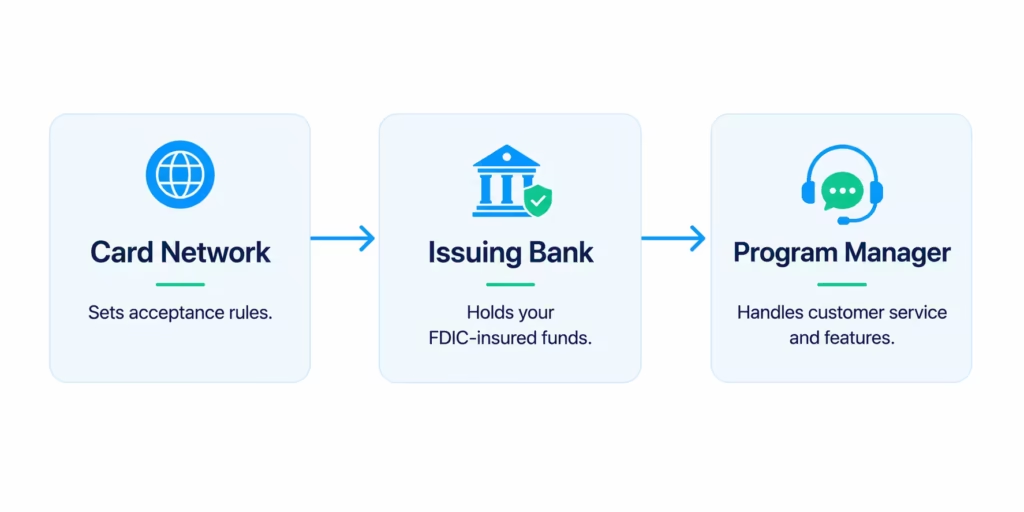
The card network is the logo on the front. Visa, Mastercard, American Express, or Discover set the rules for how the card is accepted at stores and online. They handle the payment rails but don’t hold your money.
The issuing bank is the actual FDIC-insured bank that holds your funds. It might be Green Dot Bank, MetaBank, or another partner bank named in the fine print. This is the entity legally responsible for your balance.
The program manager is the brand you see marketed. It could be a payroll company, a retailer, or a fintech app. They handle customer service and features, but they don’t hold the money themselves.
When something goes wrong, customer service usually goes through the program manager first. But the issuing bank is where your funds actually sit.
How a Prepaid Card Works
The cycle is simple. You load funds onto the card. You spend from that balance. When the balance runs low, you reload. When it hits zero, the card declines new purchases.
Before your first swipe, you’ll need to complete the activation process. This usually means calling a number on the sticker, visiting a website, or opening an app. You’ll enter the card number and confirm some personal details.
Some cards, especially ones that support direct deposit, also require ID verification under federal “Know Your Customer” rules. Activation ties the card to you and unlocks its full features.
Once activated, you add money. Then you spend it like you would with any other card. Swipe it in stores, tap it at contactless readers, enter it online, or use it at the ATM. Each purchase reduces your available balance in real time.
When funds run out, most prepaid cards simply decline the transaction at checkout. There’s no overdraft in most cases, which is one reason people use these cards for budgeting. You can’t spend money you don’t have on the card. A few programs allow a small opt-in overdraft, but that’s the exception, and it usually comes with fees.
Checking your balance is easy. Most cards offer a mobile app, a website login, a text alert service, and a toll-free number. Some also print the balance on ATM receipts. Getting into the habit of checking before big purchases prevents embarrassing declines at the register.
💡 Pro Tip: Set up low-balance text alerts the same day you activate. A quick heads-up when your balance drops below a chosen amount saves you from a declined card at the gas pump or grocery store.
Prepaid Card vs. Debit and Credit Cards
All three cards look nearly identical. They all carry a Visa or Mastercard logo, a 16-digit number, and a chip. But the money behind each one comes from a very different place, and the rules that protect you differ too.
Here’s a quick side-by-side view:
| Feature | Prepaid Card | Debit Card | Credit Card |
|---|---|---|---|
| Funding source | Preloaded balance you own | Linked checking account | Borrowed line of credit |
| Credit check to get one | No | Yes (usually) | Yes |
| Builds credit | No | No | Yes |
| Interest charged | Never | Never | Yes, on unpaid balances |
| Overdraft risk | Rare | Common | Not applicable |
| Bank account required | No | Yes | No |
How a Prepaid Card Differs From a Debit Card
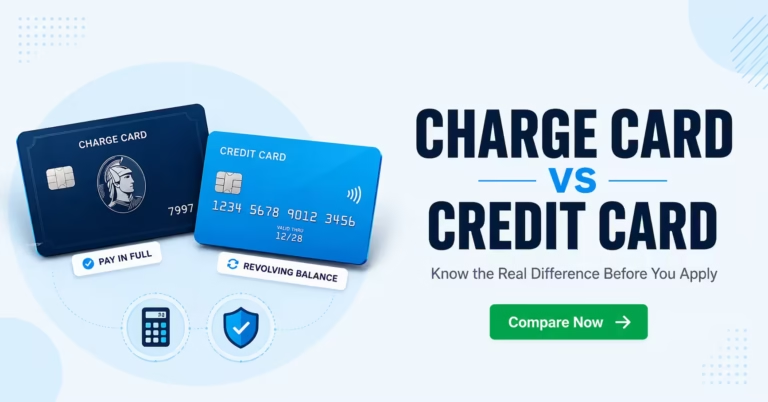
The biggest gap between the two is the bank account. A debit card is tied directly to a checking or savings account. Every swipe pulls money from that account in near real time. A prepaid card has no bank account attached. It only draws from the balance you loaded onto the card itself.
Overdraft rules also split them. Debit cards, if you’ve opted in, can let you spend past your balance and charge you a fee for it. Most prepaid cards can’t overdraft at all. If you try to buy something that costs more than your balance, the payment just fails.
Both types accept direct deposit. You can have a paycheck, tax refund, or government benefit sent to either one using the card’s routing and account numbers.
How a Prepaid Card Differs From a Credit Card
A credit card lets you borrow money from the issuer up to a set limit. You pay it back later, and if you don’t pay in full, interest applies. A prepaid card involves no borrowing at all. There’s no credit line, no interest charge, and no bill at the end of the month.
Credit history is another key split. Credit card use gets reported to the three major credit bureaus, so responsible use builds your score. A prepaid card sends nothing to credit bureaus.
Applying for one won’t ding your credit, and using it won’t help build credit either. That’s a common misconception worth clearing up. If credit-building is your goal, a secured credit card is usually the better tool.
Types of Prepaid Cards
Many people already hold a prepaid card without knowing which category it belongs to. Naming the type helps you understand its features and limits.
General Purpose Reloadable (GPR) cards are the most flexible option. You buy them at retail stores, sign up online, or get them from a fintech app. They accept direct deposit, allow cash reloads, and work anywhere the network is accepted. Netspend, Bluebird, and Green Dot cards are common examples.
Payroll cards are issued by employers as an alternative to a paper check. If you don’t have a bank account, your paycheck lands on the card every pay period. These cards typically offer basic ATM access and some free features. Federal rules state that workers must have at least one free way to withdraw their full wages.
Government benefit cards deliver payments like unemployment, Social Security, tax refunds, or SNAP benefits. The Direct Express card, used for federal benefit payments, is one well-known example. These often have specific fee schedules set by the issuing agency.
Gift cards are a closed-loop version of the prepaid concept. A store-branded gift card, like one from Target or Starbucks, only works at that retailer. A network-branded gift card, with a Visa or Mastercard logo, works more broadly but usually can’t be reloaded and expires under certain rules.
Most reloadable prepaid cards follow the CFPB’s rule. They include a short, standardized prepaid account disclosure on the packaging. This disclosure lists the main fees up front so you can compare cards before buying one.
How to Add Money to a Prepaid Card
Loading funds is straightforward once you know your options. Each method has trade-offs in speed, cost, and convenience.
Direct deposit is usually the fastest and cheapest way. Give your employer or benefits provider the card’s routing number and account number. Your paycheck or benefit posts to the card automatically on payday. Many cards even release funds a day or two early with direct deposit.
Bank transfers let you push money from an outside checking or savings account. You link your bank in the prepaid card’s app, enter the amount, and confirm. These transfers usually clear in one to three business days and rarely carry a fee.
Cash reloads at retail locations are helpful if you deal mostly in cash. Networks like Green Dot Reload @ the Register, MoneyPak, or Vanilla Reload let you hand cash to a cashier at stores like Walmart, CVS, or 7-Eleven. The cashier loads it to your card, usually within minutes. A reload fee often applies here, commonly between $3 and $6 per load.
Mobile check deposit works on most GPR cards. You snap a photo of a signed check in the app, and the funds post after review. Standard deposits are usually free but can take several days. Instant options exist for a fee.
Card-to-card transfers are available on some programs. You can send money from one prepaid card to another in the same network, often for free or a small fee.
Where You Can Use a Prepaid Card
For most network-branded prepaid cards, the answer is “almost anywhere a regular card works.” That includes in-store purchases, online shopping, phone orders, and contactless taps at the register. If a merchant accepts Visa or Mastercard, they generally accept a Visa- or Mastercard-branded prepaid card.
ATM withdrawal is available on most GPR, payroll, and government benefit cards. You’ll need the PIN you set during activation. Fees for out-of-network ATMs can add up quickly, so most issuers publish a list of “in-network” ATMs where you pay nothing.
International use is possible on many prepaid cards, but not all. Check the cardholder agreement before traveling. Some cards charge a foreign transaction fee. Others block international use entirely, which can be frustrating if you assume it will work abroad.
A few merchants place a hold on prepaid cards that’s larger than the actual purchase. Gas stations, hotels, and car rental companies are the main examples. A $30 gas fill-up might trigger a $100 hold.
The hold drops off in a few days, but during that time the reserved amount is unavailable. Pay inside at the register or ask about the hold amount before renting to avoid surprises.
Open-Loop vs. Closed-Loop Prepaid Cards
The difference between an “open-loop” and a “closed-loop” card explains why some prepaid cards work everywhere, and others don’t.
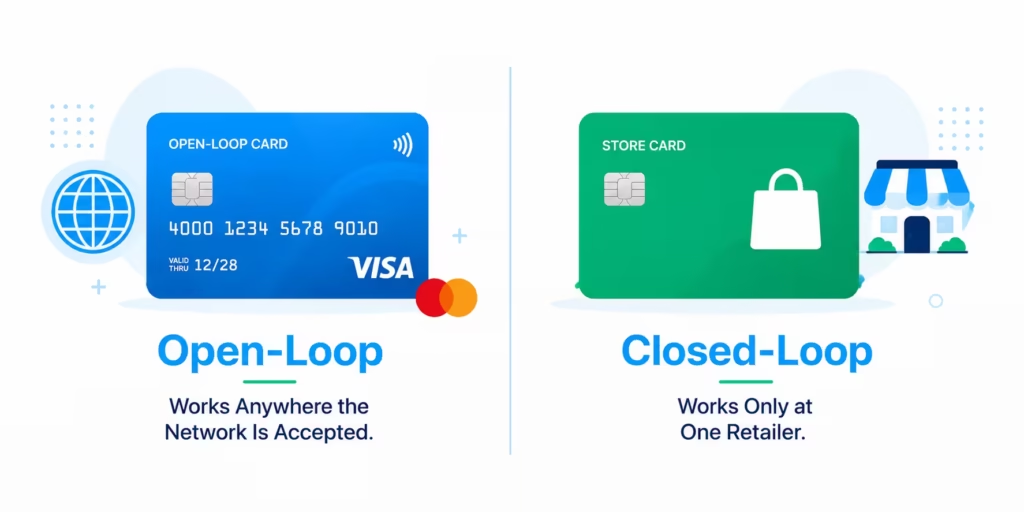
An open-loop card carries a payment network logo, like Visa, Mastercard, American Express, or Discover. It works anywhere that network is accepted. Most GPR, payroll, and government benefit cards fall in this group.
A closed-loop card is tied to a single merchant or a small group of merchants. A Starbucks card, a Home Depot card, or a mall-branded gift card is closed-loop. They can only be redeemed at the stores listed on the card.
To tell them apart, look for the network logo. If a Visa, Mastercard, Amex, or Discover mark sits on the card, it’s open-loop. If the only branding is a store logo, it’s closed-loop.
Common Prepaid Card Fees
Fees are the biggest reason prepaid cards get a bad reputation. Some cards are genuinely cheap. Others charge for nearly every action. Reading the prepaid account disclosure before you buy tells you exactly what to expect. The following fees are the most common categories.
| Fee Type | Typical Range | When It Applies |
|---|---|---|
| Activation fee | $0 to $9.95 | Buying the card at retail |
| Monthly maintenance fee | $0 to $9.95 | Every month you hold the card |
| ATM withdrawal fee | $0 to $3.00 | Using an out-of-network ATM |
| Cash reload fee | $3 to $6 | Adding cash at a retail location |
| Inactivity fee | $2 to $5 per month | The card sits unused for a set period |
| Decline fee | $0 to $1 | A transaction fails for insufficient funds |
| Paper statement fee | $0 to $2 | Requesting mailed statements |
| Foreign transaction fee | 0% to 3% | Buying in a foreign currency |
The CFPB’s prepaid rule requires issuers to display these fees in a standardized “short form” and “long form” disclosure. Under the CFPB prepaid account rule, you can compare cards side by side without hunting through fine print. Take a minute to read this before you buy.
⚠️ Mistake to Avoid: Choosing a “no monthly fee” prepaid card without checking the reload and ATM fees. A $0 monthly card that charges $4 per cash reload can cost more than a $5-a-month card with free reloads if you add cash twice a month.
How to Avoid Unnecessary Prepaid Card Fees
You can trim most fees down to zero or near-zero with a few habits.
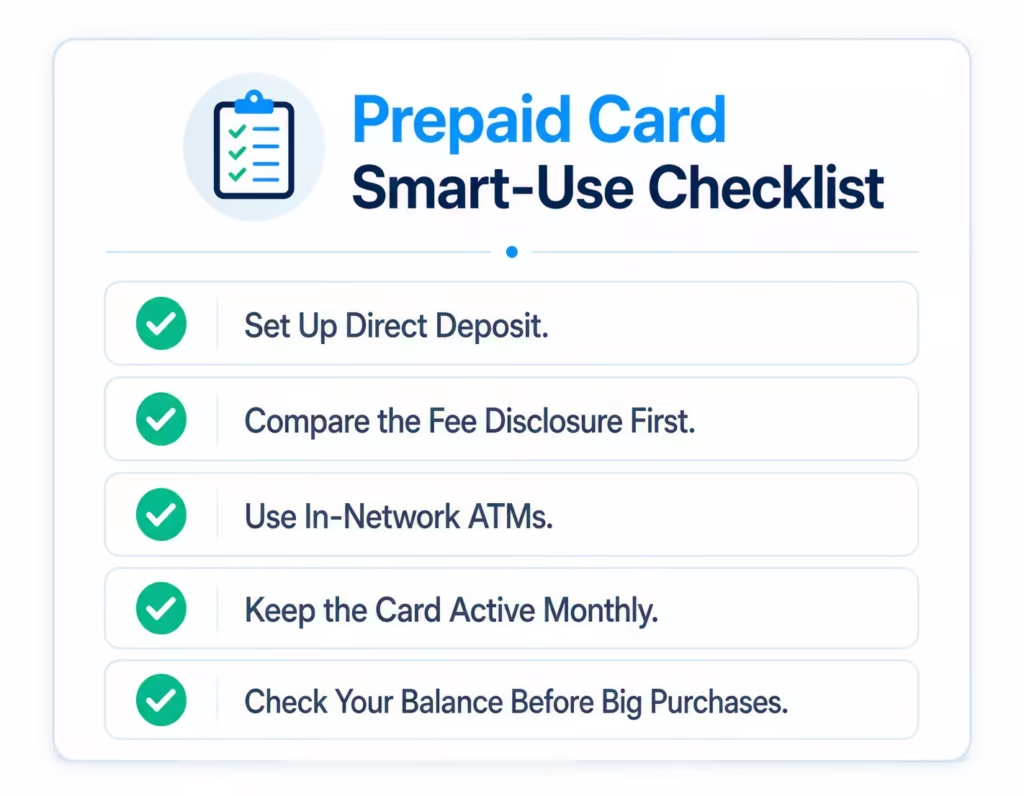
Start with direct deposit. Most cards waive the monthly maintenance fee when you set up recurring direct deposit above a small threshold, often $500 a month. Direct deposit also replaces cash reloads, which cuts out that per-load fee entirely.
Compare fees before you commit. The prepaid account disclosure on the back of the packaging or on the issuer’s website makes this quick. Two cards that look identical at the checkout aisle can differ by $50 or more per year in fees.
Use in-network ATMs. Every major prepaid card has a network of surcharge-free ATMs. The card’s app usually has an ATM finder. Get in the habit of checking it before you pull cash, especially when traveling.
Don’t let the card sit idle. Inactivity fees can drain a card you forgot about. Either use it for at least one small purchase a month or move the balance to another account and close the card.
If your card charges a decline fee, check your balance before big purchases. A quick app check costs nothing. A decline fee costs a dollar and a bit of embarrassment.
Does a Prepaid Card Affect Your Credit Score?
The short answer is no. Prepaid cards do not affect your credit score in any direction. They don’t help you build credit, and they don’t hurt it either.
Here’s why:
Credit scores are built from data reported to the three credit bureaus, Equifax, Experian, and TransUnion. Credit card issuers report your balances, limits, and payment history each month. Prepaid card programs don’t report anything to the credit bureaus because there is no borrowing involved. There’s no loan to track. Just your own money moving through the card.
Applying for a prepaid card also doesn’t trigger a hard credit inquiry. Most programs don’t run any credit check at all. They may verify your identity through a separate system, but that check doesn’t touch your credit report or lower your score.
This is a common mix-up worth clearing up. A secured credit card is different. It requires a refundable deposit that acts as your credit limit, but it’s a real credit card. It reports to the bureaus. It builds credit. If credit-building is your goal, a secured credit card is the right tool, not a prepaid card.
Is Your Money Protected on a Prepaid Card?
Yes, in most cases, and the protections come from two federal sources you should know about.
The first is FDIC insurance. Reloadable prepaid cards from major issuers keep your money at an FDIC-insured bank. Your balance is safe up to the standard $250,000 limit.
For pass-through coverage to apply, the FDIC requires that the card be registered in your name, that the funds are truly held for you at the issuing bank, and that recordkeeping meets specific rules. If the bank behind the card fails, your money is protected up to the insured amount.
The second is the CFPB prepaid rule, which extended parts of Regulation E to cover prepaid accounts. Once you register the card in your name, you get:
- Limits on your liability for unauthorized transactions
- The right to dispute errors and get provisional credit while the issuer investigates
- Clear fee disclosures before you buy the card
- Free access to your account balance, transaction history, and written history
Under Regulation E’s error resolution rules, your liability for unauthorized transactions is limited if you report the loss quickly. Reporting within two business days after learning of the loss caps your liability at $50. Reporting within 60 days of the statement caps it at $500. Waiting longer than 60 days can expose you to unlimited liability for transactions after that window.
One important note: the cardholder agreement for your specific card explains the exact protections and deadlines. Read it once when you activate the card, then keep the digital copy handy in case you ever need it.
What to Do If a Prepaid Card Is Lost or Stolen
Act fast. The clock on your liability protections starts the moment you know the card is missing.
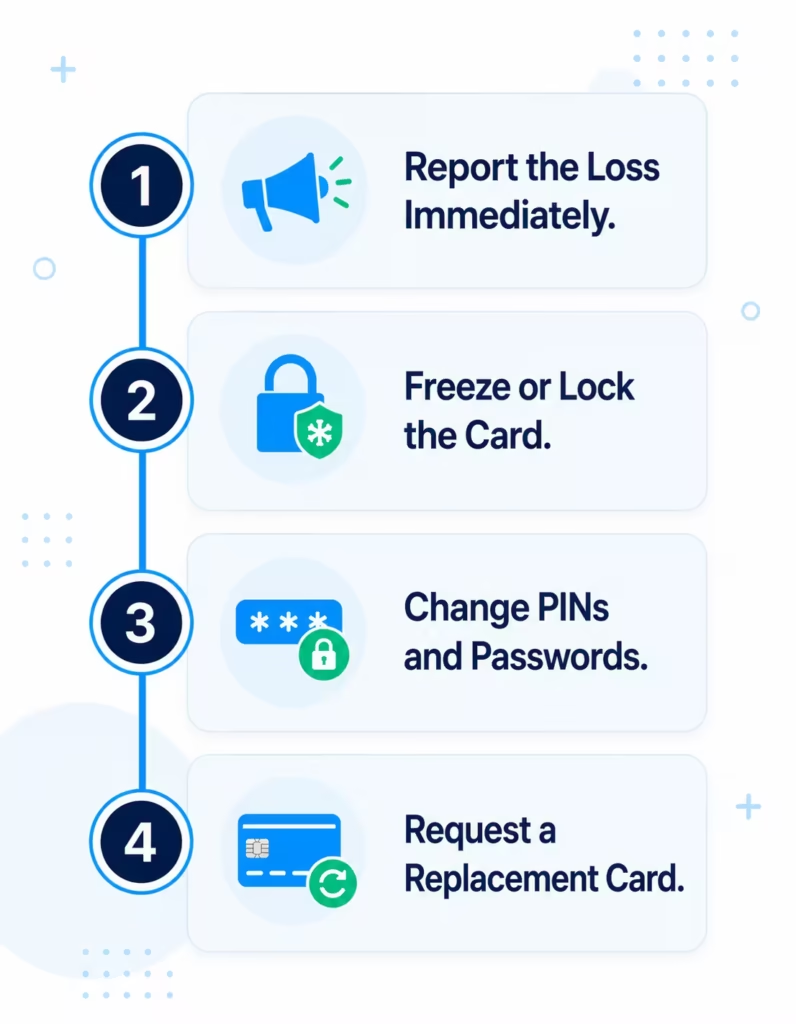
Report the loss to the issuer right away. Every prepaid card has a customer service number on the back and inside the app. If you can’t find the physical card, log into the app and check the “help” or “lost card” section for the number. Report it right away to limit your loss to $50 under Regulation E. Just notify us within two business days of finding out about the loss.
Freeze or lock the card in the app if that option is available. Most major GPR programs let you disable the card with a single tap while you decide whether to order a replacement.
Change your PIN and online password if you suspect they were compromised. If the card was linked to any mobile wallets, remove it from those wallets too.
Ask the issuer to send a replacement card and, if possible, transfer your balance to the new card. Keep a record of the date, time, and person you spoke with in case a dispute follows.
Advantages and Drawbacks of Prepaid Cards
Prepaid cards aren’t universally good or universally bad. They fit some situations well and fit others poorly. Weighing both sides helps you decide honestly.
Advantages of Using a Prepaid Card
Spending control
You can’t spend money you don’t have on the card. That built-in limit helps people who struggle with overdrafts on traditional debit cards or who tend to overspend with credit.
No credit check needed
Damaged credit doesn’t stop you from getting a reloadable prepaid card. That’s a big deal for people rebuilding financial habits or starting fresh.
No bank account required
For unbanked or underbanked households, a prepaid card acts as a working substitute for a checking account. It accepts direct deposit, allows bill payments, and provides a card for everyday use.
Useful for teaching money habits
Parents often use prepaid cards to teach teenagers how to budget with a fixed balance. When the money is gone, it’s gone. The lesson lands quickly and safely.
Handy for travel and gifts
A prepaid card gives you a fixed spending amount for a trip or a gift without exposing a full bank account or credit line.
Drawbacks of Using a Prepaid Card
Fees can add up
Between activation, monthly fees, reloads, and ATM charges, a poorly chosen card can cost more than a basic checking account.
Doesn’t build credit
Prepaid cards don’t report to bureaus, so responsible use won’t lift your score. That matters if credit-building is on your near-term to-do list.
Fewer rewards
Most prepaid cards offer no cash back, points, or purchase protections. A regular rewards credit card, used responsibly, gives back more.
Some merchant limits
Some merchants, like gas stations, hotels, and car rentals, can cause issues with prepaid cards. They often place big pre-authorization holds, which can lead to friction. Regular debit and credit cards handle these more smoothly.
Fund access delays if the program shuts down
If the program manager or bank has an issue, your money stays safe up to FDIC limits. However, access may take longer than with your own bank.
📌 Did You Know: The Direct Express prepaid card serves millions of Social Security and federal benefit recipients each month who don’t have a traditional bank account, making prepaid cards one of the largest ways federal benefits reach Americans today.
How to Know If a Prepaid Card Is Right for You
A prepaid card fits well in specific situations. It’s less useful in others. Match your situation to one of the following patterns to decide.
Consider a prepaid card if:
- You don’t have a bank account and want a safe way to receive pay or benefits.
- You want strict spending discipline and prefer that a card physically stop working when the money runs out.
- You’re teaching a teen or family member how to manage money with a fixed balance.
- You need a temporary card while you’re between bank accounts, disputing a debit card issue, or waiting on a replacement.
- You want to keep travel spending separated from your main bank account.
Look at a different option if:
- You’re trying to build or rebuild credit. A secured credit card does what a prepaid card can’t. It reports on-time payments to the bureaus while still limiting your risk.
- You already have a bank account in good standing. A standard debit card usually offers similar features with fewer fees.
- You want cash back or travel rewards. A rewards credit card, paid off every month, will deliver more value.
- You expect to make large hotel, car rental, or gas station purchases regularly. The pre-authorization hold problem may not be worth it.
The best approach is to match your primary goal with the tool that serves it best. For pure spending control without borrowing, a well-chosen reloadable prepaid card with direct deposit and low fees is hard to beat.
For credit-building, choose a secured card instead. For everyday banking with a positive record, a standard checking account and debit card will usually cost less over time.
Frequently Asked Questions (FAQs)
What is a prepaid card?
A prepaid card is a payment card loaded with your own money in advance, so you can only spend what’s already on it. There’s no bank account or credit line attached, and it stops working once the balance hits zero.
What is a disadvantage of a prepaid card?
Fees can pile up fast between activation, monthly charges, reloads, and ATM withdrawals. A poorly chosen card can end up costing more than a basic checking account over a year.
What is the difference between a credit card and a prepaid card?
A credit card lets you borrow money up to a set limit and charges interest if you don’t pay it back in full. A prepaid card only spends money you’ve already loaded, so there’s no borrowing, no interest, and no monthly bill.
What is the difference between a debit card and a prepaid card?
A debit card is linked to a checking account and pulls funds from it with each swipe. A prepaid card has no bank account attached; it only draws from the balance loaded directly onto the card itself.
Can you buy a prepaid Visa card in a store?
Yes, general-purpose reloadable cards are commonly sold at retail stores, and you can also sign up online or through a fintech app. Brands like Netspend, Bluebird, and Green Dot are widely available at retail locations.
How do I put cash on a prepaid card?
Retail networks like Green Dot Reload @ the Register, MoneyPak, and Vanilla Reload let you pay cash to a cashier. You can use these at stores like Walmart, CVS, or 7-Eleven. A reload fee usually applies, commonly between $3 and $6 per load.
Can I withdraw cash from a prepaid card?
Yes, you can withdraw cash from ATMs with most general-purpose reloadable, payroll, and government benefit cards. Just use the PIN you set when you activated the card. Using an out-of-network ATM can lead to extra fees. So, check the issuer’s in-network ATM list first to avoid these charges.
Can I transfer money from my prepaid card to my bank account?
Many prepaid card programs support transfers to an outside checking or savings account through the card’s app. These bank transfers typically clear in one to three business days and usually don’t carry a fee.
Does a prepaid card affect my credit score?
No, prepaid cards do not affect your credit score in either direction. They aren’t reported to Equifax, Experian, or TransUnion because there’s no borrowing involved, so using one won’t build or damage your credit.
Is my money protected if the prepaid card issuer has a problem?
Yes, reloadable prepaid cards from major issuers hold your money at an FDIC-insured bank, protected up to $250,000 once the card is registered in your name. The CFPB prepaid rule also limits your liability for unauthorized transactions if you report them quickly.
Wrapping Up
We’ve covered what a prepaid card is, how it works, and how it differs from debit and credit. We also looked at the fees to watch for and the protections in place. Your money is backed by FDIC pass-through insurance and the CFPB prepaid rule.
The best way to use a prepaid card is for spending control, helping unbanked users, or teaching money habits. Pair it with direct deposit to avoid most fees. For most readers, matching the card to your specific goal (budgeting, teaching, or receiving benefits) will deliver the best results.
If you know someone weighing whether to accept a payroll card or hand a teen their first spending card, share this guide with them. It could save them from costly fees and confusion on day one.