
You were at the checkout, maybe buying jeans or a new TV, and the cashier made you an offer. “Want to save 20% today by opening our card?” It sounds great. But you paused, because you weren’t sure what a store credit card really is or how it differs from the card already in your wallet. That pause was smart.
A store credit card is simply a revolving credit account tied to a specific retailer. It lets you buy now and pay later, mostly at that one store or brand.
Below, you’ll find a full breakdown of how these cards work, where you can use them, what they cost, and how to decide if one belongs in your wallet.
Key Takeaways
This guide explains what store credit cards are, how they work, where they are accepted, what they cost, how they affect credit, and when their rewards justify applying.
Core Facts:
- A store credit card is a revolving credit account tied to a retailer, while a retail credit card and private-label card mean the same thing.
- Store cards can be store-only or carry a Visa or Mastercard logo, which determines whether you can use them beyond the retailer.
- Retail cards often have higher APRs, with many at or above 30%, plus possible late fees and lower credit limits.
- Applying usually creates a hard inquiry, while payment history, new accounts, and credit utilization can affect your credit score.
- Common benefits include 10% to 20% first-purchase discounts, store rewards, special offers, and promotional financing.
- Before applying, check acceptance, APR, fees, credit limit, promotional terms, rewards value, shopping frequency, repayment ability, and long-term value.
Best for:
- Shoppers who want to understand how a store credit card works before accepting an offer at checkout.
- Consumers comparing store-only cards with network cards that carry a Visa or Mastercard logo.
- Shoppers deciding whether discounts and rewards provide enough ongoing value to justify opening a new credit account.
What Is a Store Credit Card?
A store credit card is a line of credit linked to a retailer or retail brand. You use it to make purchases at that store, and you repay the balance over time, just like any other credit account.
The terms “store credit card” and “retail credit card” mean the same thing. People use both names interchangeably. You may also hear the term “private-label credit card.” That’s the industry name for the same product.
Here’s the basic flow. You buy something with the card. The purchase becomes a balance. Each month, you get a statement. You pay some or all of the balance. If you carry a balance past the due date, the issuer charges interest.
One thing surprises many shoppers. The retailer usually does not lend you the money itself. Instead, it partners with a bank or financial company. Big issuers like Synchrony and Capital One run the credit programs behind many famous retail brands. So the store name is on the card, but a bank handles the account.
Retail cards also come in two main forms. Some work only at that one store. Others carry a Visa or Mastercard logo and work almost anywhere. That difference matters a lot, and we’ll dig into it below.
What Is a Department Store Credit Card?
A department store credit card is the same product, just tied to a department store. Think of classic retailers that sell clothing, home goods, and beauty products under one roof. Many of these stores have offered their own cards for decades.
A department store card can be store-only or part of a wider card program. Two cards can show the same store name and still work very differently.
That’s the key lesson here. The retailer’s name on the plastic does not tell you where the card works. The card’s terms do. Always check whether the card is a store-only product or a network card before you apply.
How Do Store Credit Cards Work?
The mechanics are simpler than most people expect. Here’s the typical path, step by step:
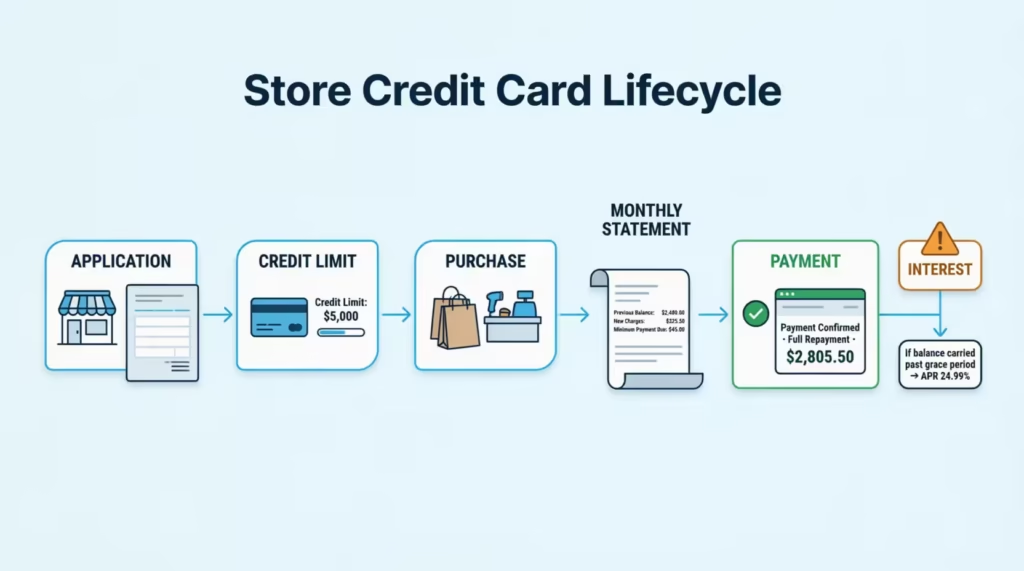
- Application. You apply at the register, online, or through the retailer’s app. Approval often comes in minutes.
- Credit limit. If approved, the issuer sets a credit limit. That’s the most you can owe at one time. Retail card limits tend to start lower than limits on general-purpose cards.
- Purchases. You charge purchases at the store. Some cards apply a discount or special offer automatically at checkout.
- Monthly statement. Once a month, the issuer sends a statement. It lists your purchases, your balance, and a minimum payment.
- Payment. You pay at least the minimum by the due date. Paying the full balance is how you avoid interest in most cases.
- Interest. If you carry a balance past the grace period, interest gets added. Retail card rates are often high, so this part deserves your attention.
Promotions can attach directly to a purchase. For example, a furniture store might offer 12 months of special financing on a sofa bought with its card.
One more point worth making. This account is real credit, not store gift-card value. Every dollar you spend is borrowed money that you must repay under the account’s terms.
How Are Store Credit Cards Different From Regular Credit Cards?
Both products are credit accounts. Both can build or hurt your credit. The real differences show up in where you can use them, what they reward, and what they cost.
| Feature | Store Card (Store-Only) | Regular Credit Card |
|---|---|---|
| Where it works | One retailer or brand family | Almost anywhere cards are accepted |
| Rewards | Store discounts and points | Cash back, miles, or points everywhere |
| Typical APR | Often higher | Wide range, usually lower on average |
| Credit limit | Often lower | Often higher |
| Best use | Frequent shopping at one store | Everyday spending |
Rewards work differently, too. A store card usually gives perks inside that one retailer. Think extra discounts, early access to sales, or store points. A regular card rewards spending across gas stations, grocery stores, travel, and more.
Rates and limits also tend to differ. Retail cards often carry higher interest rates and smaller credit lines. That mix can raise your credit utilization faster if you’re not careful.
The trade-off is simple. A store card can shine for someone who shops at that retailer often. For spending anywhere else, it offers little or nothing.
Store Credit Cards vs. Co-Branded Credit Cards
This is where many shoppers get tripped up. Two cards from the same store can be completely different products.
A closed-loop card works only at that retailer or its sister brands. It’s the classic store-only card. No network logo appears on it.
An open-loop card carries a Visa or Mastercard logo. It’s called a co-branded card because the retailer and the network share the branding. You can swipe it at the grocery store, the gas pump, or a website that has nothing to do with the retailer.
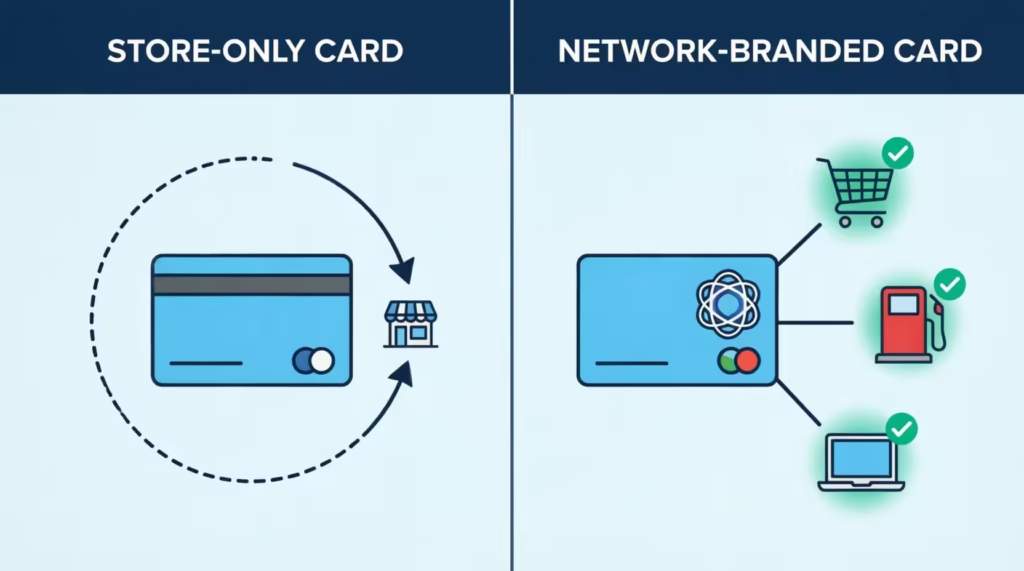
Why does this matter before you apply? Because acceptance, rewards, and value all change based on the card type. A shopper who wants one card for everything should not end up with a store-only product by accident. Check for the network logo. Read the card terms. Two minutes of checking saves years of regret.
Where Can You Use a Store Credit Card?
For a true store-only credit card, the answer is short. You can use it at that retailer, including its website and app. Some cards also work at affiliated brands owned by the same parent company. For example, a card from one clothing brand might work at its sister stores under the same corporate umbrella.
Say Jennifer opens a card at her favorite home goods store. She assumes it will work at the hardware store next door because both sell home items. It won’t. The card’s acceptance ends at that retailer’s family of brands.
Network cards are the exception. If the card shows a Visa or Mastercard logo, merchants around the world will take it. In that case, the “store” part is really just the rewards program.
Never assume all retail cards work the same way. They don’t. The fastest way to know is to look at the card offer itself. The terms will state exactly where the card is accepted.
📌 Did You Know: The CFPB counts private-label and co-branded retail cards as a major slice of the U.S. credit card market. Millions of Americans carry one, often without realizing which type they hold.
What Benefits Do Store Credit Cards Offer?
Retailers promote these cards heavily for a reason. The benefits can be real, as long as the rest of the deal fits your life. Common perks include:
- Sign-up or purchase discounts. A one-time savings, often 10% to 20% off your first purchase.
- Store rewards. Points or cash back you can only redeem at that retailer.
- Special offers. Cardholder-only coupons, early sale access, or free shipping.
- Promotional financing. Deferred interest or low-rate offers on big purchases.
For a frequent shopper, these perks add up. Michael, a facilities manager who buys supplies at the same home improvement chain every month, might save $400 a year through cardholder pricing and rewards.
Here’s the catch, though. A benefit only counts when the card’s overall terms work for you. A 15% discount on a $200 jacket saves you $30 once. If you then carry the balance at a high APR for a year, the interest can eat that savings and more. Judge the whole account, not just the opening perk.
What Are the Costs and Risks of Store Credit Cards?
Now for the other side of the ledger. Retail cards come with real costs that deserve clear-eyed attention:
- High APRs. Store cards often charge interest rates well above general-purpose cards. CFPB research on the consumer credit card market has found that retail cards routinely carry APRs several points higher, with many at or above 30%.
- Fees. Late payment fees and, on some cards, other charges can apply.
- Low credit limits. A small limit means even modest spending can push your utilization high.
- Limited use. A card that works at one store gives you fewer chances to get value from it.
- The balance trap. Some shoppers carry a balance just to keep using a promotion or discount. That habit turns a small perk into an expensive loan.
The biggest mindset shift is this one. Never weigh the purchase discount by itself. A $50 discount paired with a 30% APR and a $500 limit is a very different deal than it first appears. The discount lives in the checkout moment. The account terms live with you for years.
⚠️ Mistake to Avoid: Don’t open a card at the register just to grab a one-time discount. Sarah, a marketing coordinator, opened a department store card to save $45 on holiday gifts, then forgot the balance. Two late fees and interest later, the card had cost her $110.
How Does Promotional Financing Work?
Promotional financing sounds like free money, and that’s exactly why it confuses people. “No interest for 12 months” does not mean interest disappears forever. It means interest is paused or deferred under specific conditions.
Terms vary by offer, so read the exact promotion before you buy. Check the length of the promotional period. Check the required payments. Most of all, check what happens if you miss a condition.
With deferred interest deals, the risk is real. If you don’t pay the full promotional balance by the deadline, the issuer can add all the interest that built up since day one. On a $1,500 appliance, that retroactive interest can run into hundreds of dollars.
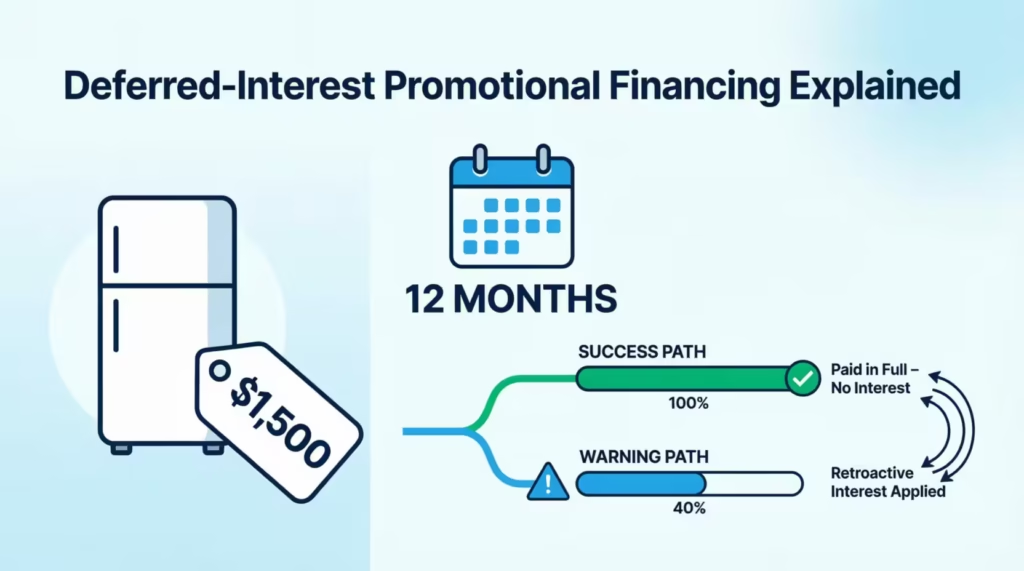
A promotion is a decision point, not a free gift. It works well when you can comfortably pay off the balance inside the window. If there’s any doubt about that, the safer move is to skip it.
Do Store Credit Cards Affect Your Credit?
Yes, and in both directions. A retail card touches your credit in several ways:
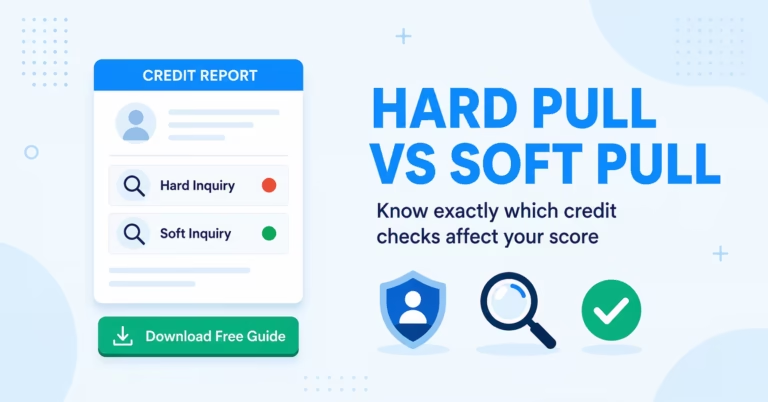
- The application. Applying usually triggers a hard credit inquiry. One inquiry causes a small, temporary dip in your score.
- A new account. The card becomes part of your credit history when the issuer reports it to the credit bureaus.
- Payment history. On-time payments help. Late or missed payments hurt, and they can stay on your reports for years.
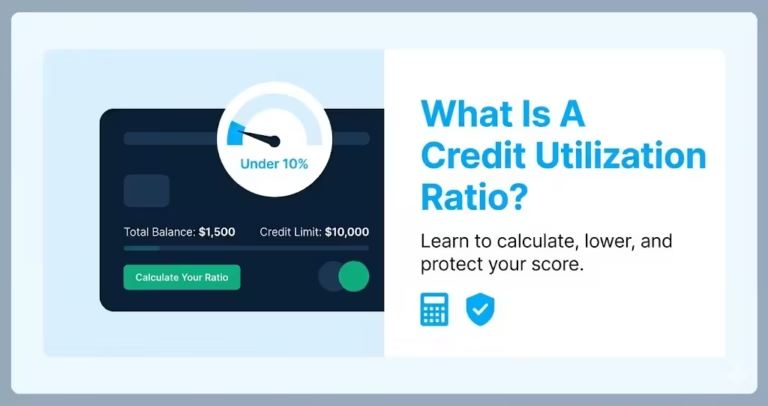
- Credit utilization. This is the share of your limit that you’re using. Low limits make it easy to run a high utilization ratio, which can weigh on your score.
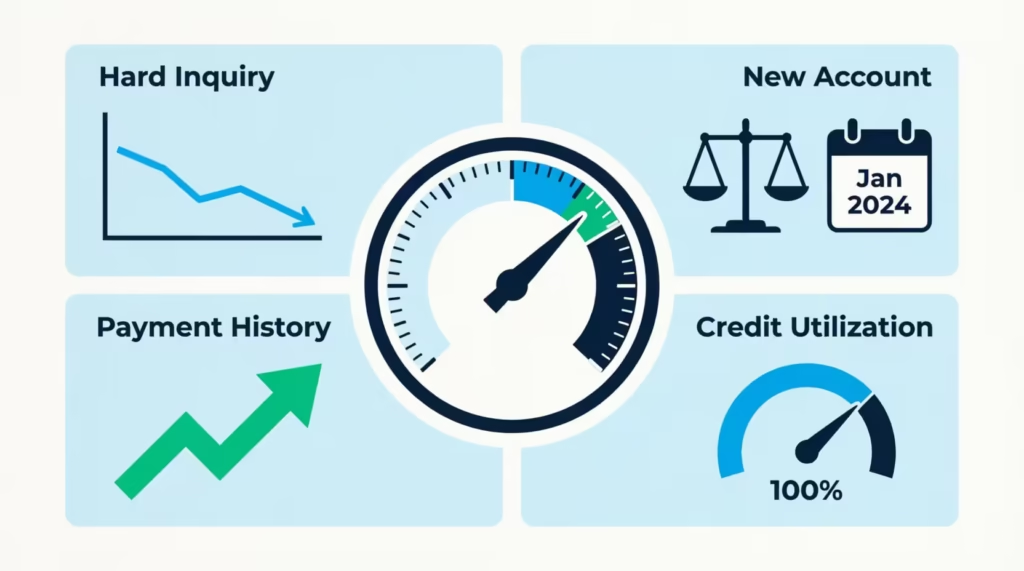
The good news is that the same mechanics can work in your favor. Store cards can aid in building credit if the issuer reports your activity and you handle the account responsibly. Scoring models like FICO reward a long record of on-time payments and low balances.
Want to see where you stand before applying? You can pull your reports from all three bureaus for free at AnnualCreditReport.com. It’s the official site, and checking your own reports never hurts your score.
Are Store Credit Cards Easy to Get?
There’s a common belief that retail cards are a guaranteed yes. They aren’t. Approval always depends on the issuer’s underwriting criteria and your credit profile.
That said, some store cards do accept applicants with thinner or fair credit files. Requirements differ from product to product. One retailer’s card might approve scores that another’s would decline. Nothing about a checkout offer guarantees approval.
Also, a word about the phrase “easiest card to get.” Even if easy approval were your only goal, it shouldn’t be the deciding factor. An easy-to-get card with a 30% APR and a $300 limit may serve you poorly. The better question is whether the card fits your spending and your budget, not whether it says yes fastest.
Who Should Consider a Store Credit Card?
This product fits some shoppers well and others poorly. The difference comes down to habits, not hype.
A store card may make sense if you:
- Shop at that retailer often, say monthly or more
- Can pay the balance in full or meet promotional terms comfortably
- Will actually use the store rewards and discounts
- Understand where the card works and where it doesn’t
Consider David, a project lead who renovates rental properties. He spends $6,000 a year at one hardware chain. Its card gives him 5% back on every purchase. That’s $300 a year in real value, and he pays in full each month.
Now consider a different shopper. She visits a clothing store twice a year. A 20% sign-up discount saves her $35, but the card then sits unused while adding an account to her credit file. For her, the math doesn’t work.
If the ongoing perks won’t earn their keep, the one-time discount rarely justifies a new account.
What Should You Check Before Applying for a Store Credit Card?
Before you say yes at the register or online, run through these questions. Each one takes seconds, and together they give you the full picture:
- Where does the card work? Store-only or network card? Look for a Visa or Mastercard logo.
- What’s the annual percentage rate? Know the APR before you charge anything you can’t pay off.
- Are there fees? Check for late fees and any other account charges.
- What’s the credit limit? A low limit means a small balance can spike your utilization.
- What are the promotional terms? Read the fine print on any financing offer, especially the deadline and the consequences of missing it.
- What are the rewards worth to you? Store rewards only matter if you’ll shop there enough to use them.
- How often do you shop here? Be honest. Occasional visits rarely justify an account.
- Can you manage the balance? Only apply if repayment fits your budget with room to spare.
- Is now the right time for your credit? A credit application adds an inquiry. Avoid stacking several applications close together.
- Does the value outlast the intro deal? Ask what the card does for you in year two, after the opening discount is gone.
If a card passes all ten checks, it’s probably a solid fit. If it stumbles on several, walking away from the checkout discount is the smarter move.
Frequently Asked Questions (FAQs)
What is the point of a store credit card?
A store credit card is designed to reward spending at one retailer through perks such as 10% to 20% first-purchase discounts, store rewards, special offers, or promotional financing. It can make sense when you shop at that retailer frequently and can comfortably repay the balance.
What happens if I don’t use a store credit card?
A store credit card can sit unused after you open it, but the account can still remain part of your credit history. The article gives an example of a shopper who visited a clothing store only twice a year and found that the new account provided little ongoing value.
Do retail credit cards hurt your credit score?
They can, especially if you apply for several cards, miss payments, or use a large share of a low credit limit. A store card can also help build credit when the issuer reports activity, and you maintain on-time payments and low balances.
Is it hard to get approved for a store credit card?
Approval is not guaranteed because each issuer uses its own underwriting criteria and credit requirements. Some store cards accept applicants with thinner or fair credit files, while another retailer may decline the same applicant.
Are store cards easier to get approved for?
Some store cards may accept applicants with thinner or fair credit files, but there is no universal approval standard. One retailer might approve an applicant whom another declines, so an easy application should not outweigh a 30% APR or $300 credit limit.
What credit score is needed to get a store credit card?
There is no single credit score requirement for store credit cards because approval standards vary by issuer and product. The article notes that some cards accept applicants with fair or thinner credit files, but it does not provide a specific minimum score.
Is it ever worth it to get a store credit card?
Yes, when you shop at the retailer frequently, use its rewards, and can pay the balance in full or meet promotional terms comfortably. For example, a shopper spending $6,000 annually at one hardware chain could receive $300 in yearly value from a 5% reward.
What are the disadvantages of a store card?
Common drawbacks include APRs that can reach 30% or more, late fees, lower credit limits, limited acceptance, and higher credit utilization from small balances. A promotional balance can also become expensive if deferred interest applies and you fail to meet the offer’s deadline.
Wrapping Up
A store credit card is a revolving credit account tied to one retailer, and it can be a useful tool or an expensive souvenir. The difference lies in where the card works, what it charges, and how often you shop there.
Based on the rate and restriction patterns covered above, the most effective approach for most shoppers is to treat the checkout discount as a bonus, not the reason to apply, and to judge the card on its full terms.
If you know someone who’s about to say yes at a register, sharing this guide could save them from a costly mistake.