
You keep seeing ads for identity theft protection. Your bank offers it. A data breach letter suggested it. Now you’re wondering if it’s a smart buy, a waste of money, or something you can skip because free tools already exist. The marketing language doesn’t help. Phrases like “dark web monitoring” and “$1 million insurance” sound powerful but leave you unsure what’s really included.
Identity theft protection is a service that watches your personal and financial information for signs of misuse and helps you clean up the damage if fraud happens. It does not stop identity theft from occurring.
This guide explains what these services do. It compares them to free options, like credit freezes. It also helps you decide if a paid plan is right for you.
At a Glance
This guide explains what identity theft protection is, including what it monitors, what it does not do, how it compares to free credit freezes, and how to decide if a paid plan is worth the cost.
Core Facts:
- Identity theft protection monitors sources like credit files at Equifax, Experian, and TransUnion, Social Security number use, dark web marketplaces, bank and card transactions, and public records.
- The service does not prevent identity theft from happening; it only speeds up detection and supports recovery after fraud occurs.
- Credit freezes and fraud alerts are free at all three major credit bureaus and directly block new accounts from being opened in your name.
- A basic fraud alert lasts one year, while an extended fraud alert for confirmed identity theft victims lasts seven years.
- Individual paid plans commonly cost $8 to $20 per month, with premium tiers reaching about $30 per month or more.
- Paid plans typically bundle identity theft insurance for recovery-related costs like legal fees and lost wages, plus restoration specialists who help dispute fraud and contact creditors.
Best for:
- Readers who received a data breach notification or bank ad and want to understand what identity theft protection actually includes before buying.
- People deciding between free tools like credit freezes and a paid monitoring plan.
- Parents or caregivers considering identity protection for children or elderly family members.
What Identity Theft Protection Actually Means
Identity theft protection is a service, usually paid, that monitors places where your personal information could be misused and helps you respond if it is. Think of it as an alert system paired with cleanup support, not a shield.
A typical plan tracks things like your Social Security number, credit files, bank accounts, and mentions of your data on the dark web. When something suspicious appears, the service sends you an alert. Some plans also include help from a fraud resolution specialist and reimbursement for certain out-of-pocket recovery costs.
The key idea to hold onto: these services are built around detection and recovery. The core promise is faster warning and support, not immunity from theft. That distinction matters because it shapes every honest answer to “is identity theft protection worth it?”
Providers monitor legal sources for stolen personal information. They flag any unusual activity they find. These services offer monitoring, recovery help, or both, and those features vary widely from one plan to another.
How Identity Theft Protection Works
Behind the scenes, an identity theft protection service is really a set of automated scans that check for your personal information in specific places. When one of those scans finds a match or a change, the service compares it to your usual activity. If it looks off, you get an alert.
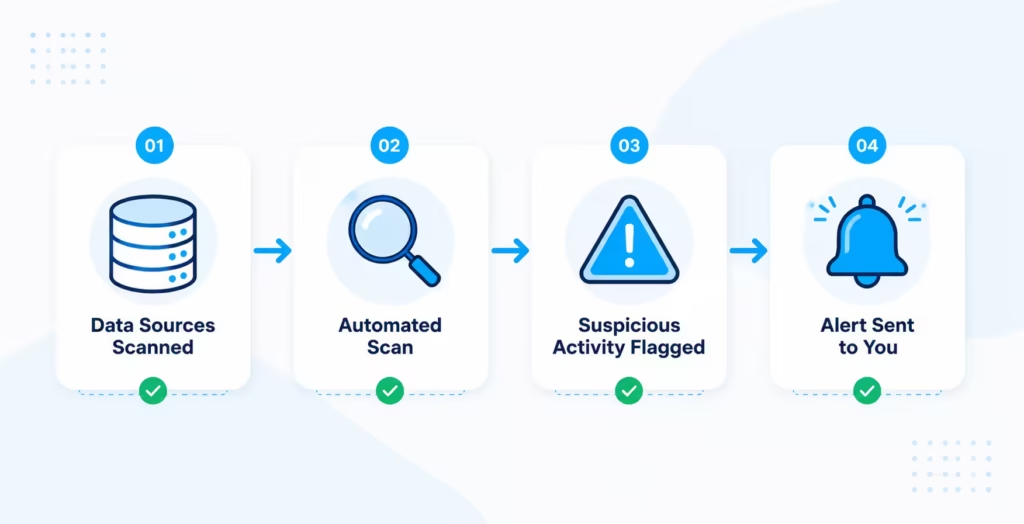
Most services rely on partnerships with the three main credit bureaus, Equifax, Experian, and TransUnion, so they can watch your credit files in near real time. Others tap into breach databases, dark web forums, public records, and sometimes bank or card feeds you connect.
The pattern is simple. Data goes in, rules and machine learning look for red flags, and alerts go out. What varies is how many data sources a plan covers, how quickly alerts fire, and how much human help you get when something looks wrong.
A quality plan spots two main threats. First, it flags account takeover attempts. This happens when a thief tries to log in or drain an existing account. Second, it identifies new account fraud, where someone opens credit in your name. A data breach notification from a retailer or health plan can also trigger targeted monitoring for the exposed data.
What Gets Monitored
Different plans watch different things. The most common items include:
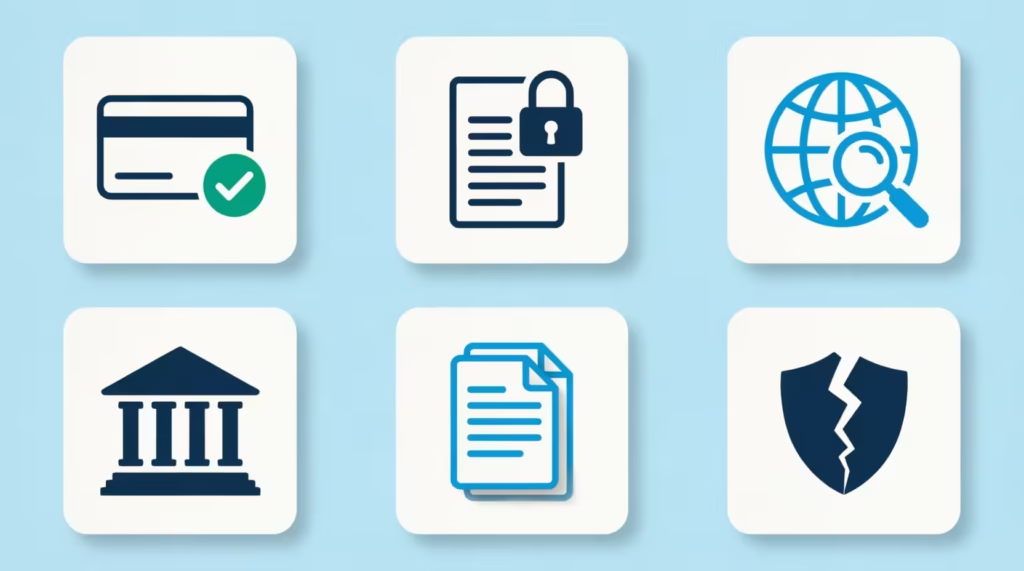
- Credit reports and new accounts. The service pulls credit file changes from one or all three bureaus and flags new inquiries, new tradelines, and address changes.
- Social Security number use. Alerts fire when your SSN appears with a new name, address, or employer.
- Dark web marketplaces and forums. Automated scans look for your email, passwords, SSN, and card numbers on hidden sites.
- Bank and credit card transactions. With your permission, the service scans linked accounts for unusual charges.
- Public records. New court records, address changes, and payday loan filings can hint at fraud.
- Data breaches. When a company you’ve used gets breached, the service tells you what data was exposed.
Some plans add extras like sex offender registry alerts near your address or investment account monitoring. Read the feature list closely, because two plans at the same price can watch very different things.
💡 Pro Tip: Alerts are only as useful as your response. Turn on push and email alerts, and save your provider’s phone number in your contacts so you can act fast when something fires.
What Types of Identity Theft This Covers
Most services aim to catch several kinds of fraud, not just credit card theft. The broader the plan, the more of these it can detect.
New account fraud is the classic case. A thief uses your name and SSN to open a credit card, loan, or utility account. Credit file monitoring catches this quickly because a new inquiry or tradeline shows up on your report.
Account takeover happens when someone gains access to an existing account, like your bank login, brokerage, or streaming service. Dark web scans and login alerts help here, along with any transaction monitoring you connect.
Medical identity theft is when a thief uses your info to get treatment, prescriptions, or insurance claims. This is harder to detect because medical records don’t feed into credit bureaus. Some plans watch health insurance databases or benefits statements, but coverage is limited.
Tax-related identity theft occurs when someone files a tax return with your SSN to steal a refund. Most services can’t detect this directly. You often learn about it from the IRS after your real return is rejected.
Synthetic identity fraud blends real data, usually a real SSN, with fake names to create a new “person.” Because the name doesn’t match yours, standard credit monitoring can miss it. SSN-focused monitoring helps, but this type is famously hard to catch early.
Child identity theft targets minors because their clean credit files are attractive to thieves and often go unchecked for years. Family plans can watch a child’s SSN for any credit activity, which for a child should be zero.
What Identity Theft Protection Does Not Do
This is the section most ads skip, and it may be the most important part of this guide. Identity theft protection does not prevent someone from stealing your identity. It cannot stop a data breach at a company that holds your information. It cannot block a phishing email from reaching you. It cannot lock a criminal out of applying for credit in your name.
What it does is speed up detection and support recovery. Even the best plan is reactive by design. The value is in catching problems early and reducing the hours you’d spend fixing them alone.
Paid services also cannot promise your money back for every loss. Federal law generally limits your liability for unauthorized credit card use to $50, subject to the law’s conditions. The Fair Credit Billing Act provides this protection, and many card issuers offer additional zero-liability protections. As a result, credit-card protection plans may focus on costs or services not covered by those existing protections rather than reimbursing fraudulent credit-card charges themselves.
Common Misconceptions
A few myths deserve a direct correction:
- “It replaces a credit freeze.” It doesn’t. A freeze blocks new credit applications. Monitoring only tells you after the fact.
- “It guarantees I’ll get my money back.” Reimbursement is capped, has exclusions, and usually requires you to report fraud quickly.
- “It watches everything.” No service can see every corner of the internet or every private database. Coverage has real limits.
- “Free credit score apps do the same thing.” They usually don’t. Most only show one bureau and only credit-related activity.
⚠️ Mistake to Avoid: Signing up for a plan and then ignoring alerts. A service that pings you three times before you check the app is not doing its job because you’re not doing yours.
Identity Theft Protection vs. Credit Monitoring
These two get mixed up all the time, and the confusion can be costly. They overlap, but they are not the same thing.
Credit monitoring is a narrower service. It watches your credit files at one or more bureaus and alerts you to changes like new accounts, hard inquiries, balance jumps, and address updates. Many banks, card issuers, and free apps offer basic credit monitoring at no cost.
Identity theft protection usually includes credit monitoring, then adds more. That extra layer often means SSN monitoring, dark web scans, public records checks, non-credit account alerts, restoration support, and identity theft insurance.
In practical terms, credit monitoring catches new account fraud on your credit report. Identity theft protection tries to catch a broader range of misuse and gives you human help when something goes wrong. If your only worry is a stranger opening a credit card in your name, a free credit monitoring tool plus a credit freeze may already cover you.
| Feature | Credit Monitoring | Identity Theft Protection |
|---|---|---|
| Watches credit files | Yes | Yes |
| Watches SSN outside credit | No | Usually yes |
| Dark web scans | Sometimes | Usually yes |
| Restoration specialist | Rarely | Usually yes |
| Insurance / reimbursement | Rarely | Usually yes |
| Typical cost | Often free | Around $8 to $30 per month |
Identity Theft Protection vs. Credit Freezes and Fraud Alerts
Here’s where the honest math gets interesting. Two of the strongest protections against identity theft are free by federal law, and many people don’t know they exist.
A credit freeze locks your credit file at each bureau. When frozen, most lenders can’t pull your report, which means they can’t approve new credit in your name. You lift the freeze when you want to apply for credit. Under federal law, freezes and unfreezes are free at all three major bureaus. The FTC confirms that a freeze lasts until you lift it and costs nothing.
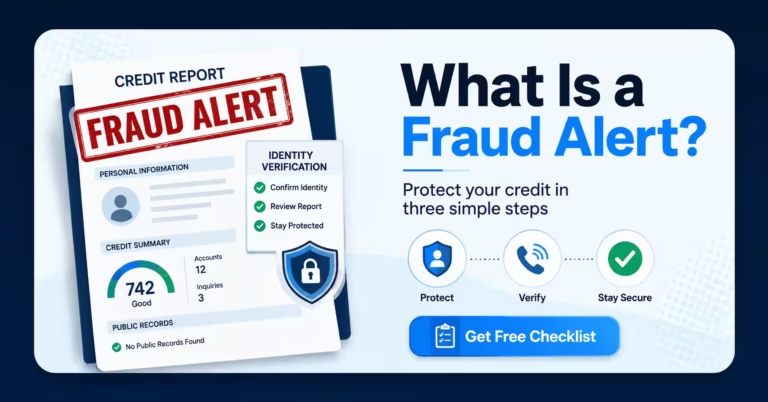
A fraud alert tells lenders to take extra steps to verify your identity before opening new credit. It’s less strict than a freeze, but it’s also free. A basic fraud alert lasts one year. An extended alert, for confirmed identity theft victims, lasts seven years.
Both tools directly target new account fraud, which is one of the most common and most damaging types of identity theft. A paid service watches for signs of new account fraud after the fact. A freeze tries to stop it before it starts.
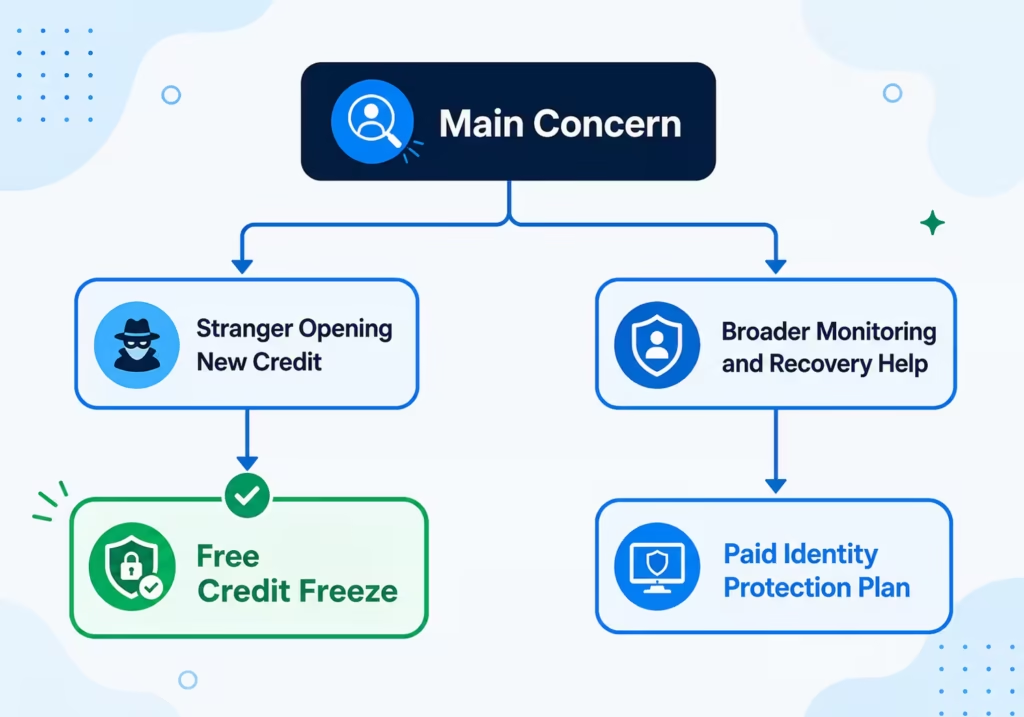
So do you need paid identity theft protection if freezes are free? It depends on what you want:
- If your main concern is a stranger opening credit in your name, a freeze at all three bureaus does more than most paid plans.
- If you want broader detection, non-credit monitoring, and help cleaning up after fraud, a paid plan adds value.
- Many people benefit from doing both. Freezes block new credit. A monitoring service watches everything else.
📌 Did You Know: You can freeze your credit for a child under 16, too. Contact each bureau to place a protected consumer freeze. This is often free and it can shut down child identity theft before it starts.
What’s Included in a Paid Identity Theft Protection Plan
Paid plans bundle several features. The two most heavily advertised, and often the most misunderstood, are insurance and restoration services.
Identity Theft Insurance / Reimbursement
The eye-catching “$1 million” number you see in ads is a policy limit, not a promise. It’s the maximum the insurer would pay across all covered costs. Actual coverage focuses on out-of-pocket expenses tied to recovering from fraud, not on paying you back for fraudulent charges themselves. Those charges are usually covered by your card issuer or bank under federal consumer protections.
Typical covered costs may include:
- Legal fees related to the theft
- Lost wages while resolving the case
- Notary, mailing, and phone expenses
- Costs to replace stolen documents
Common exclusions may include:
- Losses that are already addressed by other consumer-protection laws, such as the Fair Credit Billing Act or Electronic Fund Transfer Act
- Losses caused by family members
- Business-related losses
- Punitive damages
Coverage details vary by provider and plan tier. Before you rely on the headline number, read the actual policy summary. The insurer’s document, not the marketing page, controls what gets paid.
Identity Restoration Services
Restoration is often the most useful part of a paid plan. When fraud hits, you’re assigned a fraud resolution specialist who works your case. They can help you:
- File reports with the FTC at IdentityTheft.gov
- Contact credit bureaus to dispute fraudulent accounts
- Reach out to creditors, banks, and utilities
- Draft affidavits and dispute letters
- Track case progress and follow up
Some plans offer full-service restoration, where the specialist does most of the work with your permission. Others offer guided support, where they coach you through each step. Full-service is more helpful during a crisis. Guided support can still save hours of research.
If your identity has ever been stolen before, or if you’d struggle to make dozens of calls during a fraud event, restoration support is often the strongest reason to pay for a plan.
Do You Actually Need Paid Identity Theft Protection?
There’s no universal answer. Whether identity theft protection is worth it depends on your risk profile, your time, and how much protection you already have.
Consider a paid plan more seriously if several of these apply:
- Your data was exposed in a major breach. Reports of exposed records from health systems, retailers, and credit bureaus have been common in recent years, and stolen data can be misused years later.
- You have a large public footprint. Business owners, real estate investors, medical professionals, and public figures leave more information trails.
- You’re self-employed with an EIN tied to your SSN. Business identity theft can hit both.
- You have elderly parents or minor children you help manage. Family plans can cover them.
- You’ve been a victim before. Repeat targeting is common.
- You want restoration help. If the thought of spending 20 hours on phone trees during a fraud event is a dealbreaker, restoration support has real value.
You may be able to skip a paid plan if all of these are true:
- You’ve placed a credit freeze at all three bureaus
- You already get free credit monitoring from a card, bank, or breach settlement
- You’re comfortable checking statements and reports regularly
- You have no dependents you cover
- You’re willing to handle any cleanup yourself
Also check what you already have. Many credit cards, banks, and employers offer bundled monitoring or restoration services at no extra cost after a breach. Duplicate coverage is common and easy to avoid once you look.
Identity Theft Protection for Children and Family Members
Child identity theft is uniquely damaging because it can go undetected for years. Kids don’t check credit reports, and thieves count on that. Family plans typically watch each covered person’s SSN and, for adults, their credit files.
For children, monitoring pairs well with a protected consumer credit freeze at all three bureaus. The freeze blocks new credit in the child’s name. The monitoring alerts you if the SSN shows up somewhere it shouldn’t. For elderly relatives, especially those in care facilities, the same combination is often the strongest setup.
What to Look for in an Identity Theft Protection Service
If you decide a paid plan makes sense, the real work is comparing what each provider actually gives you. Marketing pages look similar. The details underneath do not.
Focus on these substantive features:
- Bureaus monitored. Three-bureau monitoring is stronger than one-bureau. Some plans start at one bureau on lower tiers.
- SSN and non-credit monitoring. Does the plan watch your SSN outside of credit files? Public records? Sex offender registries near your address?
- Dark web scanning depth. All providers claim this. Look for what data types they watch (email, SSN, credit card, driver’s license, passport, phone) and how often.
- Alert speed. Some plans push alerts within minutes of a credit file change. Others take a day or more.
- Restoration model. Full-service is stronger than “we’ll guide you.” Ask if a U.S.-based specialist is assigned to your case.
- Insurance details. Look at what’s actually covered and the sub-limits, not just the headline number.
- Family coverage. How many adults and children are included? Is child credit file monitoring available?
- Cancellation terms. Month-to-month plans are safer than annual prepaid ones if you’re unsure.
Skip features that don’t affect real protection, like “identity health scores” and heavy dashboards packed with vanity metrics.
Typical Cost of Identity Theft Protection
Prices range widely by tier and family size. Individual plans commonly fall between about $8 and $20 per month, with premium tiers running up to about $30 per month or more. Family plans usually cost more but are cheaper per person than buying two adult plans.
Annual plans often carry a discount but lock you in. Before signing up, verify the current price on the provider’s own site, because promo pricing changes often. Also check whether any monitoring is already included with your card issuer, employer benefits, or breach settlement notice.
What Happens After You Get a Fraud Alert
An alert can feel scary at first. It shouldn’t be. Most alerts turn out to be something you did yourself, like applying for a new card, or a low-risk data exposure with a small next step. Knowing the workflow makes it easier to act.
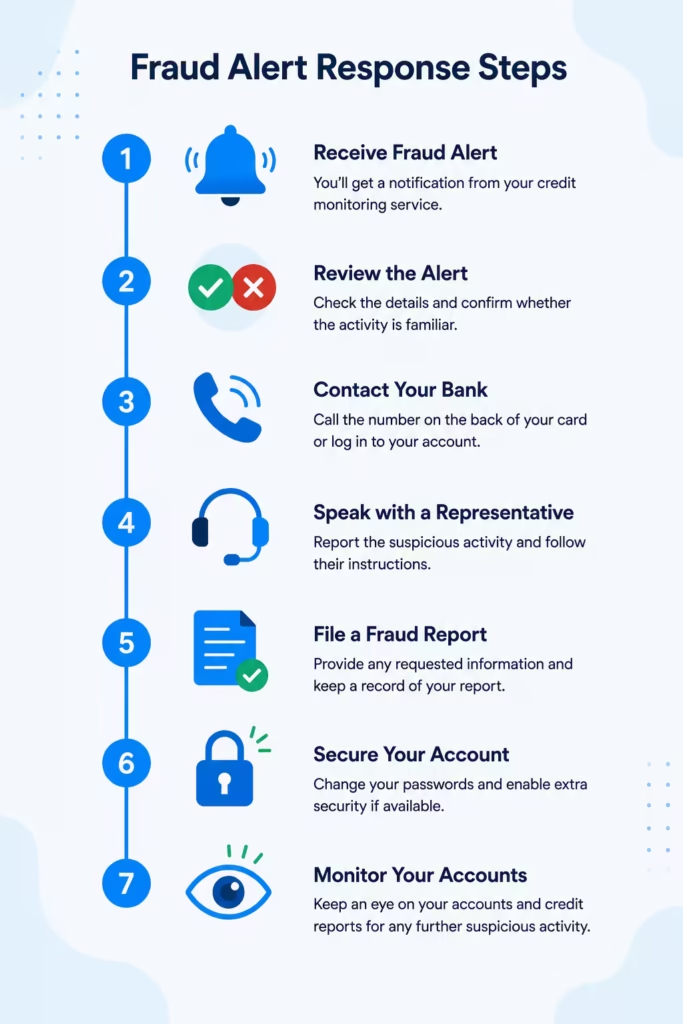
Here’s what a normal response looks like:
- Open the alert and read the details. The service will tell you what triggered it (new inquiry, new account, dark web hit, address change, etc.).
- Confirm or deny. If you recognize the activity, mark it as yours. If you don’t, mark it as suspicious.
- Call the flagged account or lender. For a new account you didn’t open, call the creditor’s fraud line and ask them to close the account.
- Contact your fraud resolution specialist. If your plan includes one, they can take over disputes and reports.
- Report identity theft. For confirmed identity theft, file a report at IdentityTheft.gov. You’ll get a personal recovery plan and an Identity Theft Report you can use with creditors and bureaus.
- Add a fraud alert or freeze. If you don’t already have a freeze, place one at all three bureaus. Fraud alerts are free and can be added right away.
- Watch for follow-up activity. Fraud often comes in waves. Keep checking your alerts closely for the next several weeks.
If the exposure was through a data breach notification, follow the specific steps in the notice. Many companies offer free credit monitoring or restoration support after a breach, and taking that offer is often the right first move.
💡 Pro Tip: Save your service’s phone number in your contacts and turn on push notifications. When an alert fires, you want to reach a human within minutes, not spend an hour hunting through your inbox.
Frequently Asked Questions (FAQs)
What is identity theft protection?
Identity theft protection is a paid service that monitors your personal and financial data for signs of misuse, such as new credit accounts or dark web exposure. It sends alerts and offers recovery help, but it doesn’t stop theft from happening in the first place.
Is it worth getting identity theft protection?
It’s worth it if you’ve had prior breach exposure, have a large public data footprint, or want hands-on help during a fraud event. If you’ve already frozen your credit and get free monitoring elsewhere, a paid plan may be unnecessary.
What’s the difference between a credit freeze and a fraud alert?
A credit freeze blocks lenders from accessing your credit report entirely, stopping new accounts from being opened. A fraud alert just requires lenders to verify your identity first; freezes are the stronger, more restrictive option, and both are free.
What is the average cost of identity theft protection?
Individual plans typically run $8 to $20 per month, with premium tiers reaching about $30 per month. Family plans cost more overall but are cheaper per person than buying separate adult plans.
What does identity theft insurance actually cover?
It reimburses recovery costs like legal fees, lost wages, and document replacement, not the fraudulent charges themselves. The advertised “$1 million” figure is a maximum policy limit, not a guaranteed payout.
Can I check if someone is using my SSN?
Yes, identity theft protection plans monitor for your Social Security number appearing with a new name, address, or employer. You can also request a protected consumer freeze for extra SSN-specific security at all three credit bureaus.
What is the first thing to do when your identity is stolen?
Call the flagged account or lender immediately and ask them to close any unauthorized account. Then file a report at IdentityTheft.gov to get an official Identity Theft Report and personalized recovery plan.
How do I protect my SSN from identity theft?
Place a free credit freeze at Equifax, Experian, and TransUnion to block new accounts from being opened using your SSN. Pairing that with SSN-specific monitoring through an identity theft protection plan adds an extra detection layer.
How do I clear my name from identity theft?
File an official report at IdentityTheft.gov to get a recovery plan and Identity Theft Report. Use that report to dispute fraudulent accounts with creditors and the three credit bureaus directly.
The Bottom Line
Identity theft protection is best understood as a detection and recovery service, not a shield. It watches your data across credit files, the dark web, and other sources, then helps you clean up if fraud happens. Free tools like credit freezes and fraud alerts do a lot of the heavy lifting on new account fraud, so a paid plan is most useful when you want broader monitoring and hands-on restoration help.
For many readers, the best move is to freeze your credit first. Then, check your current protections. After that, decide if paid identity theft protection is worth it for you.
If this guide helped clear up the confusion, share it with a friend or family member who’s asked about identity theft protection lately. Parents of young kids, recent breach victims, and anyone weighing a bank’s “identity protection” upsell will get the most from it.