
You’re at the register with a $900 laptop, and the cashier offers a two-year protection plan for $150. Or maybe you’re at home with a dead dishwasher that just passed its manufacturer’s warranty. Either way, you’re wondering the same thing about the extended warranty on your credit card: doesn’t my card already cover this?
Many credit cards include a free benefit that extends a manufacturer’s warranty on eligible purchases, but it only applies if your specific card still offers it and you paid with that card.
Below is what you’ll learn about this benefit:
- How it works
- Which issuers still offer it
- What’s covered and what’s not
- How to file a claim step by step
- Whether to rely on it or buy a store warranty at checkout
Key Takeaways
This guide explains what an extended warranty on a credit card is, including how the benefit works, which major issuers still offer it, coverage limits, exclusions, and the exact steps to file a claim.
Core Facts:
- Credit card extended warranty extends a manufacturer’s warranty on eligible purchases, with coverage starting only after the original manufacturer warranty period ends.
- Coverage is typically automatic on eligible purchases and requires no separate registration, though proof of purchase and card statements must be saved.
- Wells Fargo has removed the extended warranty benefit entirely, and Citi has removed it from nearly all cards, including Costco Anywhere Visa cardholders as of January 2023.
- Many cards cap coverage at $10,000 per claim and around $50,000 per account per year, though limits vary by issuer and card.
- Coverage is generally limited to the amount actually charged to the eligible card, so splitting payment across methods can reduce the claimable amount.
- Claim notification windows commonly run 30 to 90 days from the date the product fails, with a separate 60 to 180 day window to submit full documentation.
Best for:
- Cardholders deciding whether to rely on their card’s coverage or pay for a store extended warranty at checkout.
- People whose manufacturer warranty recently expired on an eligible item and want to know if they can still file a claim.
- Anyone unsure whether their specific credit card still offers this benefit given recent changes at issuers like Wells Fargo and Citi.
How Credit Card Extended Warranty Coverage Works
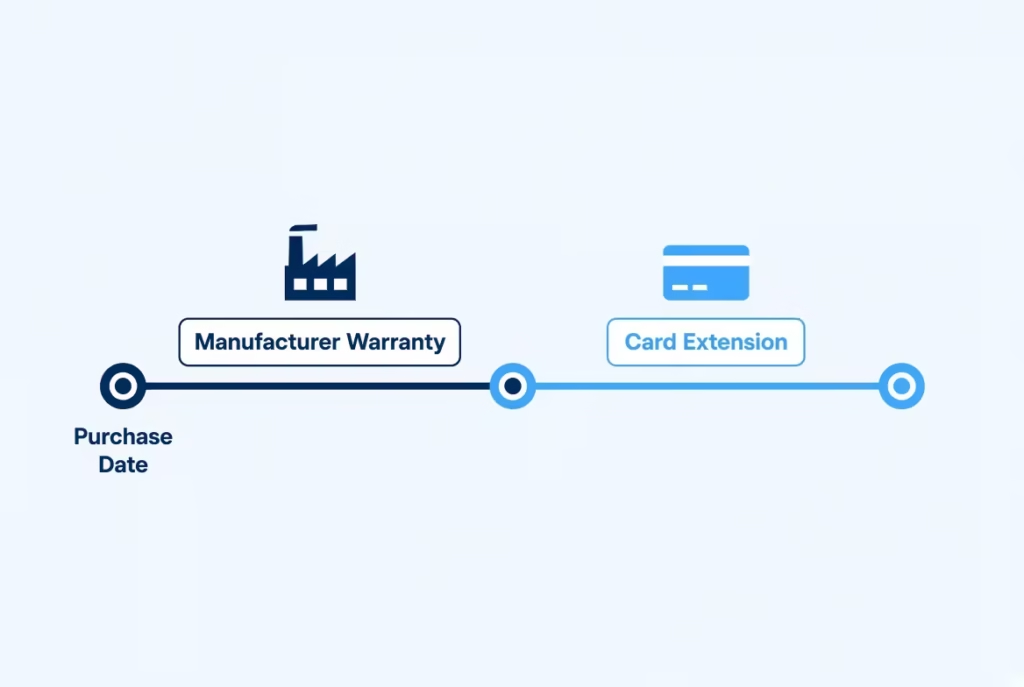
An extended warranty benefit is a card perk that lengthens the original manufacturer’s warranty on an item you buy with an eligible card. It doesn’t create new coverage. It reflects the manufacturer’s warranty. It covers the same defects and malfunctions and starts only after the original warranty ends.
Say you buy a TV with a one-year manufacturer’s warranty. If your card adds one extra year, the card’s coverage picks up in year two. If the TV screen fails due to a defect after 18 months, you should file your claim through your card benefit, not the manufacturer.
One thing that surprises people: the bank that issued your card usually isn’t the one running this benefit. Coverage usually comes from the card network, like Visa or Mastercard, or from an issuer-affiliated insurer, such as American Express’s assurance arm. Claims are managed by a third-party benefits administrator. That’s why you file through a benefits administrator rather than your card’s regular customer service line.
Coverage is usually automatic. If you charge an eligible item to an eligible card, the protection applies. There’s no enrollment form to fill out at checkout.
Does It Require Registration or Activation?
In most cases, no. The card benefit activates on its own when you pay with the eligible card. There’s nothing to sign up for.
Don’t confuse this with the manufacturer’s own warranty, which sometimes does ask you to register the product. That registration is a separate step with the manufacturer, and it has nothing to do with your card.
Since there’s no card-side registration, your proof of purchase is everything. Save the receipt and the card statement from day one, because those are the documents a claim will depend on years later.
How to Check If Your Credit Card Has This Benefit
Never assume your card has this coverage based on the logo in your wallet. Benefits vary by card product, not just by issuer, and they change over time. Checking takes about ten minutes:
- Find your card’s Guide to Benefits. This is the document that lists every protection your card carries. Look for it on your issuer’s website, in your online account under “benefits” or “card perks,” or in the paperwork that came with your card.
- Search the document for “extended warranty” or “extended protection.” If those terms don’t appear, your card doesn’t have the benefit.
- Call the number on the back of your card and ask directly if the Guide to Benefits isn’t clear.
- Note the details while you’re there: the extension length, the dollar caps, and the name of the benefits administrator.
💡 Pro Tip: Download and save a copy of your Guide to Benefits the day you get a new card. Issuers update these documents, and having the version that was in effect on your purchase date can settle disputes later.
Which Major Issuers Currently Offer or Have Cut This Benefit
This is where older advice on the internet can steer you wrong, because the landscape has shifted:
- Wells Fargo has removed the extended warranty benefit from its credit cards entirely.
- Citi has stripped the benefit from nearly all of its cards. Notably, Costco Anywhere Visa cardholders lost extended warranty coverage in January 2023.
- Chase still offers extended warranty protection on many of its cards, typically adding one year to eligible warranties of three years or less.
- Capital One includes the benefit on many cards, generally when you pay for the full purchase with the card.
- American Express still offers it on some cards, though it scaled back coverage on some products in recent years. Terms vary by card.
The takeaway: a card family’s reputation means nothing. Card benefits change, so verify the current terms for your exact card before you count on this protection.
How Long the Extension Lasts
The extension is shorter than most people expect. A typical benefit adds one extra year to the manufacturer’s warranty. Some cards stretch to two years, but that’s less common.
There are two more limits to know:
- Original warranty length cap. Most cards only extend warranties of a certain length or shorter. Chase, for example, covers eligible warranties of three years or less. American Express generally applies its extension to original warranties of five years or less. A product with a ten-year factory warranty usually won’t qualify at all.
- The clock starts after the manufacturer’s warranty ends. The extension doesn’t run from your purchase date. It attaches to the end of the original warranty.
Worked example: You buy a refrigerator with a one-year manufacturer’s warranty in March 2026, using a card that adds one extra year. The manufacturer’s coverage runs to March 2027. Your card’s extension then covers March 2027 to March 2028. Your total protection is two years from purchase, not three.
Dollar Limits on Extended Warranty Claims
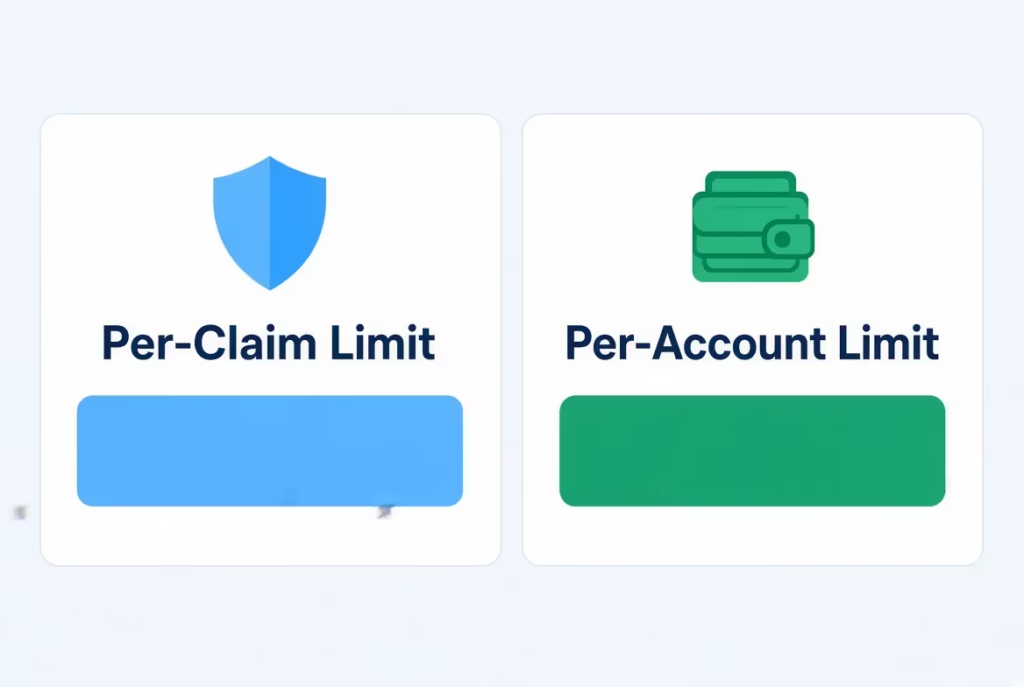
“Extended warranty” does not mean unlimited coverage. Two caps control what you can recover:
- Per-claim limit. Many cards cap a single claim at $10,000. American Express, for instance, covers up to the amount charged to the eligible card, with a maximum of $10,000 per item.
- Per-account limit. There’s usually also an annual ceiling across all claims, commonly $50,000 per card account per year, though it varies by issuer and card tier.
These figures aren’t universal. Limits vary significantly among issuers and even among their own cards. So, check your Guide to Benefits for the exact figures.
One more wrinkle: the limit that matters most is the amount you actually charged. If you bought a $1,200 laptop and put $1,200 on the eligible card, $1,200 is your practical ceiling, even if the card’s stated per-claim cap is $10,000.
How Partial Card Payments Affect Your Coverage Amount
Splitting a purchase between your card and another payment method can shrink your protection. Coverage is generally limited to the portion charged to the eligible card.
Say you buy a $1,000 appliance, put $600 on your card, and pay $400 with a gift card or cash. If the appliance dies during the extension period, your claim will likely max out around the $600 you charged, not the full price. The same logic often applies when you cover part of a purchase with rewards points.
The simple rule: if you want the full extended warranty benefit, pay for the item in full on the eligible card.
What Items Are Eligible for Coverage
The benefit exists to protect the kinds of durable goods that come with a manufacturer’s warranty in the first place. Common eligible categories include:
- Electronics: laptops, TVs, phones, tablets, cameras
- Appliances: refrigerators, washers, dryers, dishwashers
- Furniture and home goods
- Fitness equipment
- Accessories like watches and headphones
Two requirements apply almost everywhere. First, the item must come with an original manufacturer’s written warranty for the card benefit to extend. No original warranty means nothing to extend. Second, the item usually must be purchased new, and you must have charged it to the eligible card.
What’s Excluded From Extended Warranty Coverage
The exclusions list is where false assumptions live. Common exclusions across issuers include:
- Motor vehicles, boats, and aircraft, along with their parts
- Land, buildings, and anything permanently attached to property
- Plants and animals
- Consumables like batteries, ink, and cleaning supplies
- Used, refurbished, or previously owned items (policies vary by issuer, but these are often excluded or limited)
- Items bought for commercial use or resale
- Items with manufacturer warranties longer than the card’s cutoff, such as warranties over five years on some cards
- Damage from misuse, accidents, theft, or loss. The card benefit only extends the manufacturer’s defect coverage. Accidental damage and theft fall under a different benefit entirely.
If your situation sits anywhere near this list, check your card’s exact exclusion language before relying on the benefit.
You should also keep an eye out for strict claim limits. Most issuers cap the total amount they will pay per year or per individual item. These caps can be surprisingly low compared to the original price of your purchase.
Always consult your specific card agreement to understand these financial boundaries. Missing a deadline for filing your claim is another common pitfall. Many banks require you to submit your paperwork within a short window after an item breaks. Failing to act quickly could mean you lose your coverage entirely.
Extended Warranty vs. Purchase Protection vs. Return Protection
These three benefits get confused constantly, and filing the wrong type of claim wastes your deadline window. The difference comes down to what happened and when:
| Benefit | What triggers it | When it applies |
|---|---|---|
| Extended warranty | A defect or malfunction the original warranty would have covered | After the manufacturer’s warranty expires |
| Purchase protection | Accidental damage or theft | A short window right after purchase, often 90 to 120 days |
| Return protection | The retailer refuses your return | A short window after purchase, when store return policies fail you |
Quick example: Your new headphones are stolen from your car a month after purchase. That’s purchase protection. Your headphones stop charging at month 14 due to a defect, after the one-year manufacturer warranty ended. That’s the extended warranty claim. Neither is return protection, which only matters when a store won’t take an item back.
How to File an Extended Warranty Claim
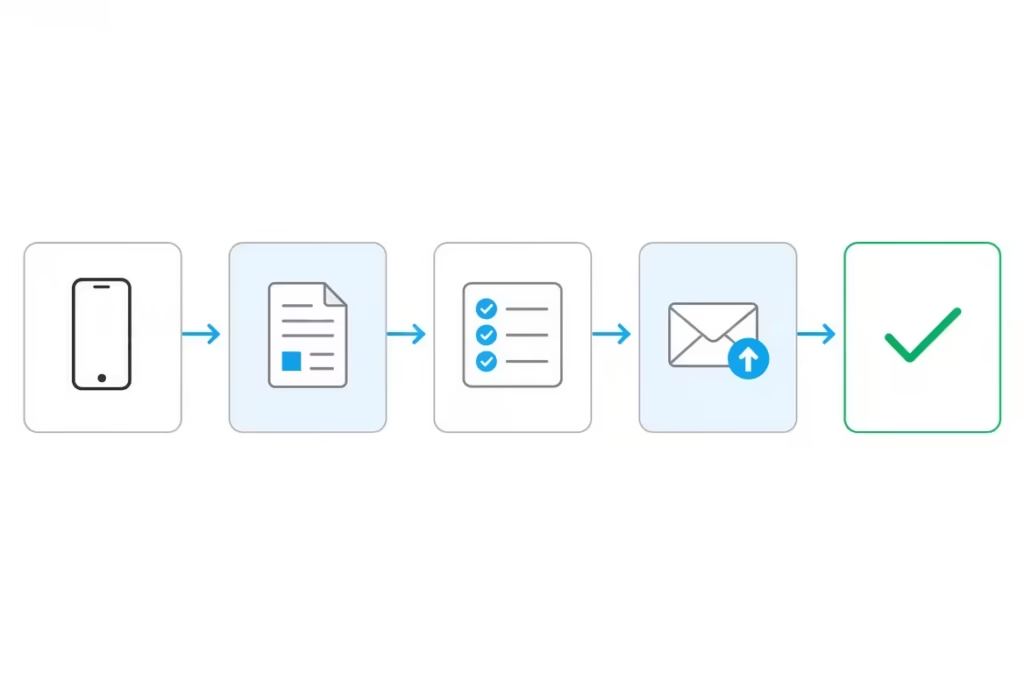
If your item just failed and the manufacturer’s warranty has expired, act fast. The process works like this:
- Contact the benefits administrator, not your card’s general customer service. The administrator’s name and contact information appear in your Guide to Benefits.
- Notify them promptly. Give the basics: what you bought, when, and how it failed.
- Complete the claim form the administrator provides.
- Submit your documentation (the checklist below).
- Wait for the determination. The administrator reviews everything and decides whether the claim qualifies.
You will need to gather specific documents to support your request. Before you start, find your original itemised receipt and a copy of the original manufacturer’s warranty.
You must also include the statement from your credit card account showing the purchase. If you had to pay for a repair, keep the repair estimate or the final professional invoice. Sending these items quickly helps the administrator process your claim without unnecessary delays.
Documents You’ll Need
Gather these before you start, because incomplete paperwork is one of the most common ways a valid claim stalls:
- The original store receipt
- Your card account statement showing the purchase on the eligible card
- A copy of the manufacturer’s original warranty
- Any other warranty or service plan documents tied to the item
- Proof of the defect if requested, such as a repair estimate or technician’s notes
Claim Deadlines You Can’t Miss
This is the part that forfeits otherwise valid claims. Deadlines run from the product failure, not from the purchase date.
The notification window typically opens the day the item breaks or you discover the defect, and it commonly runs just 30 to 90 days. After you notify the administrator, you usually have a second window. This window is often longer, lasting from 60 to 180 days, for submitting complete documentation.
Exact windows vary by issuer. The safest move is to contact the benefits administrator as soon as the item fails and ask for the specific deadlines in writing.
⚠️ Mistake to Avoid: Don’t wait for a repair quote or sit on a broken item while you “figure out next steps.” Every day you wait shortens the time you have to file a claim. The clock starts as soon as the product fails. If you miss this window, your claim is lost, even if it’s valid.
What Happens After You Submit a Claim
Once your paperwork is in, the benefits administrator reviews it against the card’s terms: Was the item eligible? Was the original warranty within the length cutoff? Did you meet the deadlines? Is the failure a covered defect?
If the claim gets approved, the administrator will usually reimburse you, arrange a repair, or replace the item. It all depends on the program. If it’s denied, you should receive a reason, and you can usually ask for a review if you believe the denial misapplied the terms.
Processing timelines vary. If weeks pass with no update, following up with the administrator is reasonable and sometimes necessary.
Common Reasons Extended Warranty Claims Get Denied
Most denials trace back to a handful of preventable problems:

- Missed deadlines. You notified the administrator after the 30-to-90-day window closed, or submitted documents too late.
- The item was excluded. Vehicles, refurbished goods, consumables, or commercial-use purchases fall outside the benefit.
- The card wasn’t eligible or active. The account needed to be in good standing at purchase, and some programs require it to remain open at claim time.
- Missing documentation. No receipt, no statement showing the card charge, no copy of the manufacturer’s warranty. Any gap can sink the claim.
- Partial payment. You split the purchase across payment methods, so the claimable amount shrank, or the item didn’t qualify.
- The failure wasn’t a covered defect. Accidental damage, misuse, theft, or normal wear isn’t extended warranty territory.
Read your card’s terms before you file, and you can spot most of these issues in advance.
Should You Rely on Card Coverage or Buy a Store Warranty?
Back to that checkout line. Here’s a practical framework for the decision:
- Confirm the benefit exists on the card you’re holding. Not the issuer generally. That exact card. If you haven’t verified it in the Guide to Benefits, you’re guessing.
- Compare limits to the item. Check the per-claim cap and extension length against the item’s price and how long you expect to use it. A $900 laptop with a $10,000 per-claim cap fits comfortably. High-end purchases deserve a closer look.
- Compare what each option covers. This is the key difference people miss. A store protection plan often covers accidental damage, like drops and spills. A card’s extended warranty only extends the manufacturer’s defect coverage. If you’re clumsy with phones, that distinction matters more than the price.
- Weigh the cost. The card benefit is free. A store plan on a $900 laptop might run $150. If your card’s coverage genuinely applies and defects are your main worry, declining the store plan can be reasonable. If the store plan covers accidents and your card doesn’t, the $150 buys something the card never promised.
For many readers, the card benefit offers a good free layer of protection for items that often have defects. Just make sure to check that it’s available and know its limits. It just isn’t a full substitute for accident coverage.
Frequently Asked Questions (FAQs)
What is extended warranty on credit card?
It’s a free card benefit that extends a manufacturer’s warranty on eligible purchases charged to that card. Coverage typically starts once the original warranty ends and covers the same types of defects, not accidental damage.
How long do extended warranties usually last?
Most credit card extended warranties add just one extra year, though some cards stretch to two. The extension only kicks in after the manufacturer’s original warranty period ends, not from your purchase date.
Is an extended warranty a rip-off?
A store-sold extended warranty can feel like a rip-off if your credit card already covers the same defects for free. It’s a better deal if the store plan covers something your card doesn’t, like accidental damage from drops or spills.
What are two reasons not to buy an extended warranty?
Skip it if your card already extends the manufacturer’s warranty on that item for free, or if the item falls under $500 to $10,000 coverage caps your card already meets. Also skip it if the product’s manufacturer warranty already exceeds your card’s coverage cutoff, like 5 years.
How does Chase credit card extended warranty work?
Chase typically adds one extra year to eligible manufacturer warranties of three years or less. You must charge the full purchase to an eligible Chase card, and you file claims through the benefits administrator, not Chase customer service directly.
Do I really need an extended warranty?
You likely don’t need a paid one if your credit card already extends the manufacturer’s warranty on that specific purchase. Check your Guide to Benefits first, since coverage varies by card and some issuers, like Wells Fargo, have dropped this benefit entirely.
Is extended warranty good or bad?
It’s a genuinely useful free benefit for electronics and appliances prone to defects, since it can double your protection at no extra cost. It’s not a full safety net, though, since it excludes accidental damage, theft, and items like vehicles or refurbished goods.
Does extended warranty cover a phone screen cracked by dropping it?
No, a cracked screen from a drop is accidental damage, not a manufacturer defect. Credit card extended warranty only covers the same types of failures the original manufacturer’s warranty covered, so accidents typically fall under purchase protection instead, if your card offers it.
What happens if my card is closed before I file a claim?
Most issuers require the account to be open and in good standing when you file a claim, not just at the time of purchase. If your card is closed before filing, your claim could be denied, so check your specific Guide to Benefits terms before assuming coverage still applies.
Wrapping Up
A credit card extended warranty can double your protection on big purchases. However, it has conditions: your card must offer it, you need to pay with that card, and there are strict caps, exclusions, and deadlines.
Issuers like Citi and Wells Fargo have cut the benefit, so checking your current Guide to Benefits matters more than ever. A practical approach is to verify your coverage before big purchases and file claims promptly when something breaks.
If this guide helped you, share it with a friend who’s about to buy a laptop, appliance, or phone; it might save them from paying twice for protection they already have.