
If you’re staring at credit card balances you can’t pay and searching for “credit card debt forgiveness,” you’re not alone. Maybe you saw an ad promising to wipe out your debt, or a friend mentioned a “government program.” Now you’re wondering if it’s real, safe, or another scam waiting to hurt your credit and your wallet.
Credit card debt forgiveness is real, but it isn’t a free wipeout. It usually means a creditor agrees to accept less than you owe, often through debt settlement, after you’ve fallen behind on payments.
In this guide, we’ll walk you through how it truly works, who qualifies, what it costs, and how to start safely without falling for scams.
Key Takeaways
This guide explains what credit card debt forgiveness really means, including how debt settlement works, typical settlement percentages, credit score damage, tax consequences, and safer alternatives like debt management plans.
Core Facts:
- Credit card debt forgiveness usually means a creditor accepts a lump-sum settlement for less than the full balance, typically after 90 to 180 days of missed payments.
- Settlement amounts commonly range from 40% to 60% of the original balance, though results vary based on the account and creditor.
- Most settlement firms require at least $7,500 to $10,000 in unsecured debt, with some setting a $15,000 minimum to take on a client.
- A “settled for less than full amount” mark and related delinquency history can stay on a credit report for up to 7 years from the date of first delinquency.
- The IRS generally treats forgiven debt of $600 or more as taxable income, and creditors typically issue a Form 1099-C the following January.
- Debt relief companies that sell services by phone cannot legally charge upfront fees before settling at least one enrolled debt, under the FTC’s Telemarketing Sales Rule.
Best for:
- Readers with real financial hardship and significant unsecured credit card debt who are weighing settlement against other relief options.
- People who have already fallen behind on payments and want to understand how the settlement process and timeline actually work.
- Anyone evaluating a debt relief offer or ad who wants to identify legitimate practices versus common scam tactics.
What Credit Card Debt Forgiveness Actually Means
Credit card debt forgiveness is a plain-English name for a legal process where a card issuer agrees to cancel part of what you owe. You pay a smaller amount, and the rest is written off. It is not a government bailout. It is not free, and it is not automatic.
Most of the time, “forgiveness” is just a friendlier word for debt settlement. That’s when you (or a company on your behalf) negotiate with the credit card company to accept a lump-sum payment for less than your full balance. The rest is treated as canceled.
Here’s the key point most ads leave out: Card issuers only agree to this once your account looks risky to them. That usually means you’ve missed several payments and your account is close to a charge-off. A charge-off happens when the lender writes your account off as a loss, usually after about 180 days of missed payments.
So the mechanism behind the marketing term is simple:
- You stop being able to pay in full.
- You fall behind, on purpose or by hardship.
- The issuer decides some money is better than none.
- You settle the account for a reduced amount.
That’s the real engine behind every “debt forgiveness program” you see advertised.
Is Credit Card Debt Forgiveness Real or a Myth?
Yes, credit card debt forgiveness is real, but not in the way many ads describe it. There is no federal program that erases credit card debt for regular consumers. Congress has not passed a “credit card stimulus” or a national forgiveness plan. Any ad that hints at that is misleading.
What is real is this: creditors, collection agencies, and debt buyers regularly accept less than the full balance to close out delinquent accounts. This has been standard industry practice for decades.
So the myth is the “free government wipeout.” The reality is a private, negotiated deal that costs you money, hurts your credit, and may create a tax bill. When used with clear eyes, it can still be a smart move for people deep in hardship.
How Debt Settlement Actually Works
Debt settlement is the mechanism most people mean when they say “forgiveness.” It follows a fairly predictable path, whether you do it yourself or hire a debt relief company.
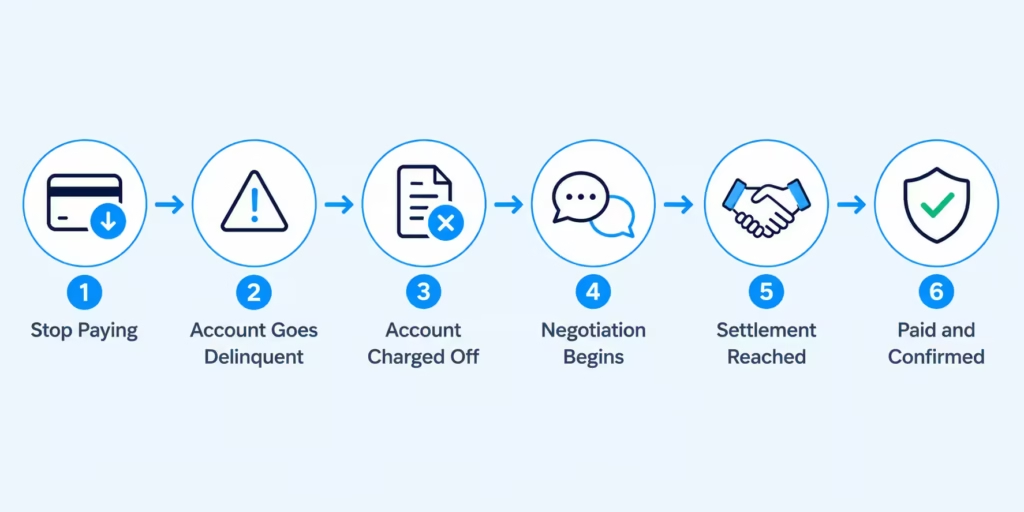
Here’s the usual flow:
- You stop paying the card. Settlement companies often tell you to stop making payments and instead deposit money into a dedicated savings account they set up in your name.
- The account goes delinquent. After 30, 60, 90, and 120 days late, the issuer sends warnings, calls, and letters.
- The account is charged off. Around day 180, the card issuer writes the debt off. It may still try to collect, sell the debt, or send it to a collection agency.
- Negotiation begins. Once the account is a charge-off account or with a collector, the creditor is more willing to accept a lump-sum payment for less than the full balance.
- Settlement is reached. A common range is 40% to 60% of the balance, though results vary a lot.
- You pay and get proof. You pay the agreed amount, and the creditor sends a letter confirming the account is “settled in full” or “paid, settled for less than full balance.”
The reason this works is cold math. Once an account is delinquent, the lender knows it may collect nothing at all. Taking 50 cents on the dollar is often better than chasing a lawsuit.
But there’s a real cost to this path, and it starts before you ever save a dime.
Risks While You’re Settling: Collections Calls and Possible Lawsuits
While you’re saving up for a settlement, the account is falling apart in the background. That creates three risks people don’t always expect.
First, collection calls and letters ramp up. Your original creditor calls first. If the debt is sold, a collection agency takes over. Under the Fair Debt Collection Practices Act, collectors have limits, but the pressure is still stressful.
Second, lawsuits are possible. If a balance is large enough, a creditor or debt buyer may sue. If they win, a judgment can lead to wage garnishment or a bank levy in many states. This is one reason waiting too long, or letting a case go to court unanswered, can backfire.
Third, interest, fees, and penalties keep piling up until the account is settled or charged off. The balance you finally settle may be larger than the balance you first walked away from.
⚠️ Mistake to Avoid: Ignoring a court summons. If you’re sued over a credit card, showing up (or responding in writing) is critical. Most default judgments happen because the person never responds, not because the debt was airtight.
Who Qualifies for Credit Card Debt Forgiveness
There is no official application, no income cap, and no government form. Instead, creditors quietly look at whether you’re a real financial risk. If they think you can pay, they won’t settle. If they think you can’t, they might.
To qualify in practical terms, you usually need:
- Real financial hardship. Job loss, medical bills, divorce, disability, reduced income, or another event that clearly hurts your ability to pay.
- Delinquent or near-delinquent accounts. Most settlements happen after 90 to 180 days of missed payments.
- A lump sum or steady savings plan. Creditors want cash, not promises.
- Unsecured debt. Credit cards, personal loans, and some medical bills qualify. Mortgages, auto loans, and federal student loans usually do not.
Financial hardship documentation helps a lot if you’re negotiating on your own. That can include pay stubs showing lower income, medical bills, a layoff letter, or a simple hardship letter explaining your situation.
If you can still afford your minimum payments, most issuers won’t take you seriously. That’s a hard truth many ads hide.
How Much Debt You Need for Forgiveness to Make Sense
Debt settlement is not worth the credit damage and fees for small balances. Most reputable settlement firms won’t even take clients with less than $7,500 to $10,000 in unsecured debt. Some set the floor at $15,000.
The math works something like this:
- Under $5,000: Usually better to use a hardship plan from the card issuer, a balance transfer, or a personal loan.
- $5,000 to $10,000: A gray zone. DIY negotiation or a debt management plan may serve you better than settlement.
- $10,000 to $30,000+: The range where settlement starts to make financial sense, especially if you can’t realistically pay it off in 5 years.
- $50,000 and up with no path to pay: Bankruptcy often becomes worth a serious look next to settlement.
The average American carries about $7,756 in credit card debt, according to LendingTree’s 2026 credit card debt study. Many searchers sit right at the edge where settlement is possible but not always the smartest move.
Credit Score Impact of Credit Card Debt Forgiveness
This is where a lot of people are caught off guard. Getting a balance reduced sounds like a win. But the path to it damages your credit, sometimes badly.
Here’s what typically happens to your credit report:
- Late payments get reported at 30, 60, 90, 120, and 150 days past due. Each one hurts more than the last.
- Charge-off status appears around day 180. This is a serious negative mark.
- Collection accounts may show up if the debt is sold.
- “Settled for less than full amount” appears on the account after the deal closes. Lenders view this as negative, though less harmful than an unpaid charge-off.
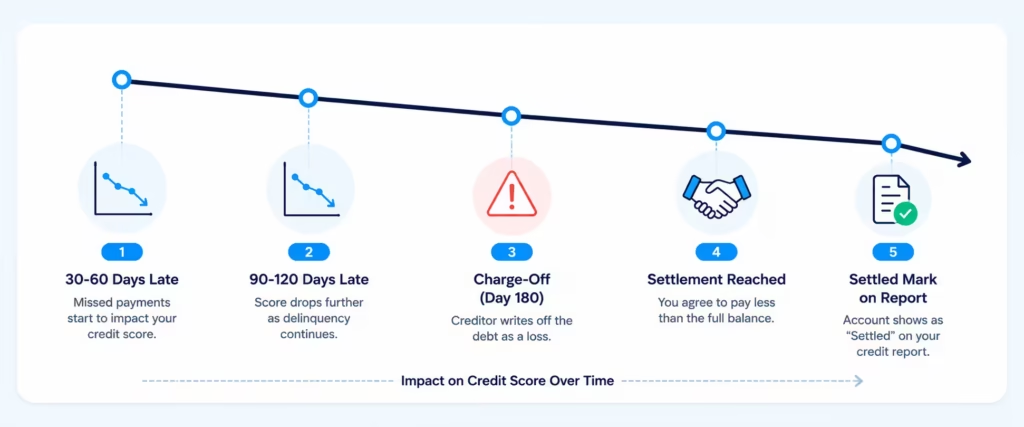
FICO scores can drop by 100 points or more for people who started with good credit. Someone who was already behind may see a smaller drop simply because their score was already lower.
Negative marks tied to settlement stay on your credit report for up to 7 years from the date of first delinquency. That’s a long time to feel the pinch when applying for a mortgage, car loan, apartment, or even some jobs.
💡 Pro Tip: If your credit is still strong, explore a 0% APR balance transfer card or a lower-rate personal loan before settlement. You may solve the debt without wrecking your score.
Tax Implications of Forgiven Credit Card Debt
Here’s the surprise that hits people at tax time. When a creditor forgives $600 or more, the IRS generally treats that canceled balance as taxable income. You may get a Form 1099-C, Cancellation of Debt, in the mail the following January.
The IRS explains this rule clearly. Canceled debt is usually taxable unless a specific exclusion applies, per IRS Topic No. 431. The creditor must issue a 1099-C for canceled debts of $600 or more.
Let’s walk through a simple example.
Say Jennifer, a 42-year-old operations manager, owes $18,000 on a credit card. After a hardship, she settles for $9,000. The card company forgives the remaining $9,000 and sends her a 1099-C for that amount.
Come tax time, Jennifer may need to add that $9,000 to her taxable income. If she’s in the 22% federal tax bracket, that could mean roughly $1,980 in extra federal tax, plus any state tax.
That surprise bill is one reason people should never look at settlement as a clean 50% discount. The real discount is smaller once taxes are counted.
The Insolvency Exception (When You May Not Owe Tax)
There’s an important escape hatch called the IRS insolvency exclusion. If you were insolvent right before the debt was forgiven, you may not owe tax on some or all of the canceled amount.
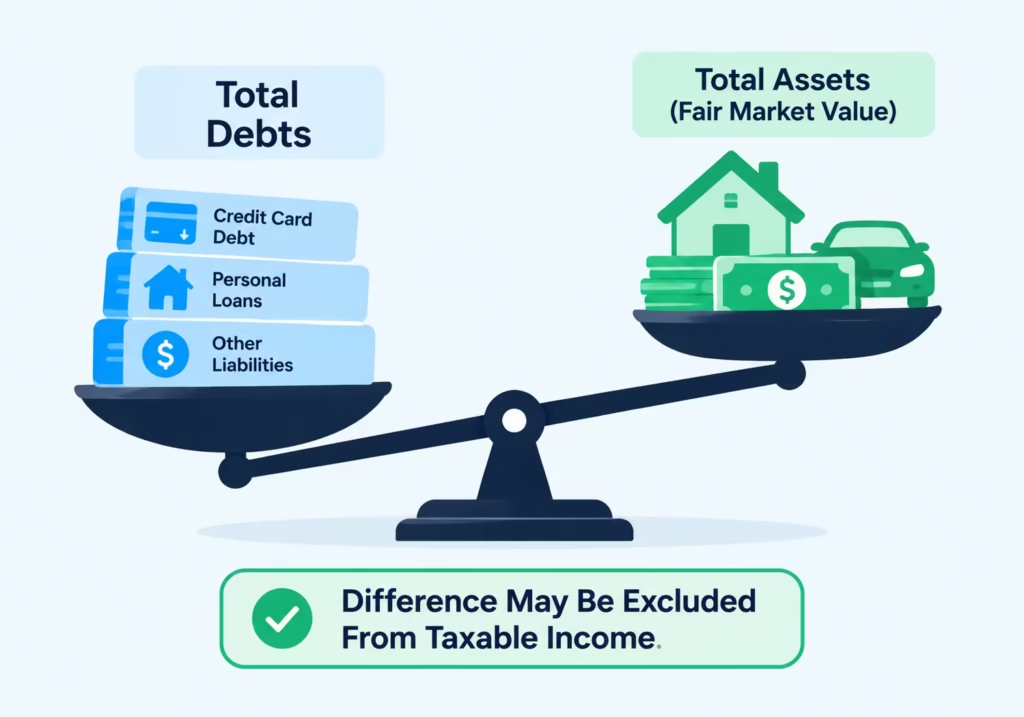
Insolvent, in plain terms, means your total liabilities exceeded the fair market value of your total assets at that moment. Assets include cash, retirement accounts, vehicles, home equity, and personal property. Liabilities include all your debts.
Here’s how the math works:
- Add up everything you owe the day before the debt is canceled.
- Add up the fair market value of everything you own.
- If debts are bigger than assets, you’re insolvent by the difference.
- You can exclude canceled debt from income up to the amount of that insolvency.
To claim this, you file IRS Form 982 with your tax return. Because insolvency can be tricky to prove, many people work with a tax professional the year they settle a large debt.
Other exclusions include debt discharged in bankruptcy, certain farm debts, and qualified principal residence debt. Credit card debt usually only fits under bankruptcy or insolvency.
What Credit Card Debt Forgiveness Costs You
The “cost” of debt forgiveness has three parts: what you pay the creditor, what you pay a debt relief company (if you use one), and hidden costs like taxes and credit damage.
Typical direct costs look like this:
- Settlement payment to the creditor: Often 40% to 60% of your original balance, but sometimes higher, especially with newer accounts.
- Debt relief company fees: Usually 15% to 25% of the enrolled debt (the amount you sign up with them to settle), charged only after a settlement is reached.
- Dedicated account fees: Small monthly fees for the special savings account used to build up your lump sum.
Federal rules protect you here. Under the FTC’s Telemarketing Sales Rule for debt relief services, for-profit debt relief companies that sell services by phone can’t charge upfront fees before actually settling at least one of your debts. If a company asks for money before any settlement is reached, that’s a major red flag.
Hidden costs add up too:
- Taxes on forgiven debt, as covered above.
- Interest and late fees that grow your balance while you save.
- Credit score damage, which raises the cost of future loans, insurance, and even some rentals.
- Legal costs if a creditor sues before the settlement lands.
A settlement that looks like “half off” on paper often works out closer to a 20% to 30% net discount once fees and taxes are included.
How Long Credit Card Debt Forgiveness Takes
Most settlement programs run 24 to 48 months from start to finish. A few settle sooner if you already have cash. Some drag longer if your balances are large or the creditor is stubborn.
Here’s a rough timeline:
- Months 1 to 6: You stop paying, start funding a dedicated account, and accounts go delinquent.
- Months 6 to 12: Some accounts hit charge-off. First settlement offers may arrive.
- Months 12 to 36: The bulk of accounts get settled one by one as your savings grow.
- Months 36 to 48: The last, largest, or most stubborn accounts close out.
That’s a long time to live with collection calls, damaged credit, and possible lawsuits. It’s why this path only makes sense when the alternative is worse.
How Debt Forgiveness Compares to Other Debt Relief Options
Debt forgiveness is one option among several. The best choice depends on your income, credit, balance size, and how quickly you want to be debt-free.
Debt Forgiveness vs. Debt Management Plan
A debt management plan (DMP) is offered by nonprofit credit counseling agencies. You keep paying your full balance, but the agency negotiates lower interest rates and a single monthly payment.
Key differences:
- DMP reduces interest, not principal. Debt forgiveness reduces principal.
- DMP protects your credit far better. Accounts stay current if you pay on time.
- DMP takes 3 to 5 years to pay off, similar to settlement, but with less damage.
- No tax hit from a DMP because nothing is forgiven.
If you can afford to pay the full balance with a lower rate, a DMP is usually the safer path.
Debt Forgiveness vs. Bankruptcy
Bankruptcy is a legal court process, not a private deal. There are two common types for consumers.
- Chapter 7 bankruptcy can wipe out most unsecured debt in a few months. You may need to give up some assets, but many filers keep everyday belongings.
- Chapter 13 bankruptcy sets up a 3 to 5-year repayment plan through the court, then discharges what’s left.
Bankruptcy stays on your credit for 7 to 10 years, but it stops lawsuits and calls quickly through the automatic stay. If your debt is very large or you’re already being sued, bankruptcy may cost less overall than a long settlement program.
Debt forgiveness is a negotiated reduction. Bankruptcy is a legal discharge. Both hurt credit, but bankruptcy often provides a faster reset for people who truly can’t pay.
Debt Forgiveness vs. Debt Consolidation or Balance Transfer
If your credit is still decent, you may not need forgiveness at all.
- Debt consolidation loan: A personal loan that pays off your cards. You then owe one lender at a fixed rate.
- Balance transfer card: A new credit card with a 0% intro APR for 12 to 21 months. You move existing balances there and pay them down interest-free during the promo period.
Both options preserve your credit and avoid tax on forgiven debt. They only work if you qualify for the loan or card, and if you can realistically pay off the balance before rates rise. For people already deep in delinquency, these doors are usually closed.
Here’s a quick comparison to make the choice clearer:
| Option | Best For | Credit Impact | Timeline | Tax Risk |
|---|---|---|---|---|
| Debt Forgiveness / Settlement | Serious hardship, large unsecured debt | Major damage | 24–48 months | Yes (1099-C) |
| Debt Management Plan | Steady income, high interest | Minor to moderate | 3–5 years | No |
| Chapter 7 Bankruptcy | No path to pay, lawsuits | Severe, 10 years | A few months | Usually no |
| Consolidation Loan | Good credit, stable income | Neutral or positive | 2–5 years | No |
| Balance Transfer | Good credit, small to mid debt | Neutral or positive | 12–21 months | No |
How to Spot a Credit Card Debt Forgiveness Scam
Because so many people search for “forgiveness,” the space is packed with scams. The federal government has clear rules that separate legitimate firms from fraud.
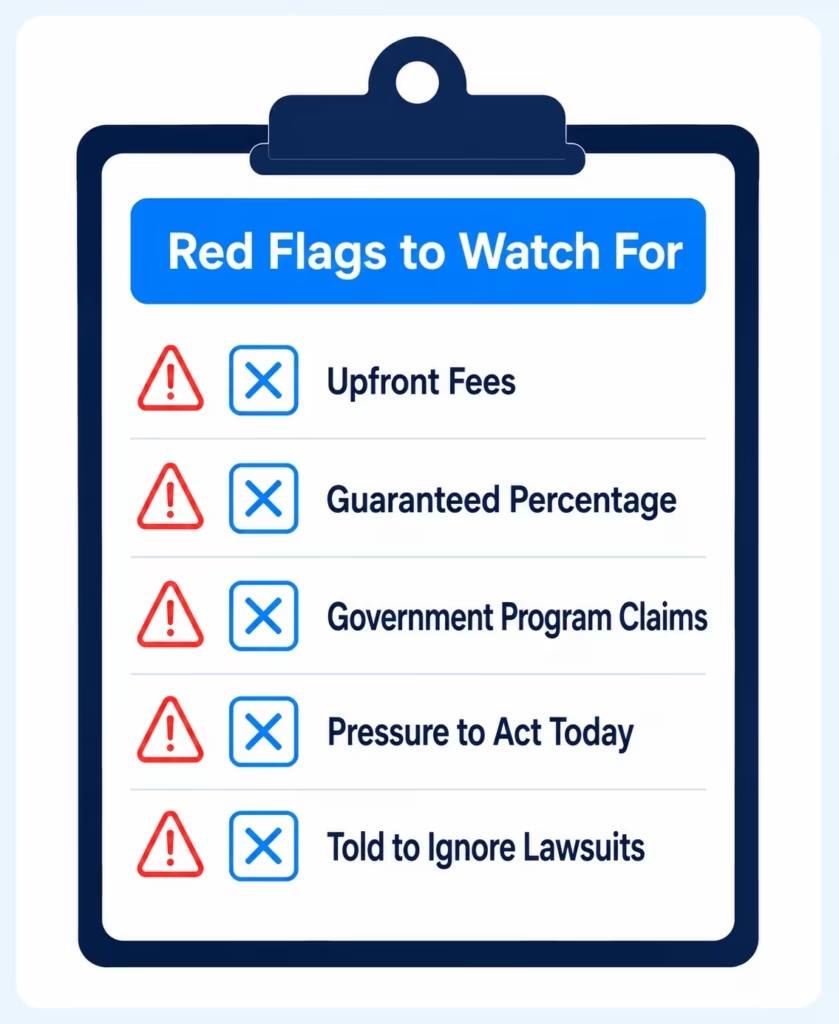
Watch for these red flags:
- Upfront fees before any settlement. The FTC’s Telemarketing Sales Rule bans this for phone-sold debt relief services. If a company demands payment before settling even one account, walk away.
- Promises of a specific reduction. No honest company can guarantee “we’ll cut your debt by 60%.” Every creditor and account is different.
- Claims of a “new government program.” There is no federal credit card forgiveness plan for regular consumers.
- Pressure to act “today” only. Legitimate firms let you review contracts and check reviews.
- No written contract, or vague terms. You should always see fees, timelines, and services in writing.
- They ask you to stop talking to your creditors. You have the right to contact your creditors any time.
- They tell you to ignore lawsuits. Ignoring court papers is one of the fastest ways to lose money.
Check any company through the Better Business Bureau, your state attorney general’s office, and the Consumer Financial Protection Bureau (CFPB) complaint database before signing anything. Nonprofit credit counseling agencies accredited by the NFCC or FCAA are usually safer starting points.
📌 Did You Know: The FTC’s Telemarketing Sales Rule bans most for-profit debt relief companies from collecting a single dollar in fees before they’ve actually settled or reduced at least one of your enrolled debts. If someone asks for money upfront, that alone can be reason to walk away.
How to Start the Process Safely
If you’ve read this far and think forgiveness may still be your best option, take a slow, careful approach. Rushing is how people get hurt.
Follow these steps:
- Take an honest financial snapshot. List every debt, balance, interest rate, and minimum payment. List your monthly income and essential expenses.
- See if you can pay in 5 years. If you can pay off unsecured debt in 5 years or less with a strict budget, settlement is probably not needed.
- Talk to a nonprofit credit counselor. Agencies affiliated with the National Foundation for Credit Counseling (NFCC) offer free or low-cost sessions and can lay out every option, including DMPs, settlement, and bankruptcy.
- Explore issuer hardship programs. Many card issuers offer temporary lower rates or reduced payments if you call and explain your hardship. This step is free.
- Compare settlement firms carefully. If you go this route, get quotes from 2 or 3 firms. Review contracts. Check complaints and licensing.
- Consider DIY settlement. For a single account, you can call the creditor yourself and negotiate. Save every letter and email.
- Talk to a tax pro before you settle. Especially if the forgiven amount will be large, plan for possible 1099-C income and the insolvency exclusion.
- Get every settlement offer in writing. Do not send money until you have a signed letter confirming the amount, the account, and that the balance will be reported as settled.
Taking these steps in order helps you avoid the two biggest mistakes: paying a scammer and choosing a path that hurts more than it helps.
Frequently Asked Questions (FAQs)
Is credit card debt forgiveness a real thing?
Yes, but it’s not a free government wipeout. It’s typically a negotiated settlement where a creditor accepts less than the full balance after you’ve fallen behind on payments.
What does debt forgiveness do to your credit?
It causes major damage. Late payments, a charge-off around day 180, and a “settled for less than full amount” mark can drop a good credit score by 100 points or more.
How long does debt forgiveness hurt your credit?
Negative marks from settlement stay on your credit report for up to 7 years from the date of first delinquency. That’s long enough to affect mortgage, auto loan, and rental applications.
How do you qualify for credit card forgiveness?
You generally need real financial hardship, an account that’s 90 to 180 days delinquent, and a lump sum or savings plan to offer the creditor. If you can still afford minimum payments, most issuers won’t negotiate.
What percentage will a credit card company settle for?
Settlements commonly land between 40% and 60% of the original balance. The exact amount depends on how delinquent the account is and the creditor’s willingness to negotiate.
Is $20,000 in credit card debt a lot?
It’s well above the national average of $7,756 per person. At that level, debt settlement often starts making financial sense, especially if you can’t pay it off within 5 years.
What debt cannot be forgiven through settlement?
Mortgages, auto loans, and federal student loans typically don’t qualify for debt settlement. Only unsecured debts like credit cards, personal loans, and some medical bills are eligible.
Will I owe taxes on forgiven credit card debt?
Usually yes. The IRS treats canceled debt of $600 or more as taxable income, and the creditor typically sends a Form 1099-C the following January.
What happens if I never pay back my credit card debt?
Your account moves through 30, 60, 90, and 120-day delinquency stages before being charged off around day 180. After that, the creditor may sell the debt to a collector or sue you, which can lead to wage garnishment.
How is debt settlement different from a debt management plan?
A debt management plan lowers your interest rate while you repay the full balance, protecting your credit. Settlement reduces the actual amount owed but causes significant credit damage and can trigger a tax bill.
Wrapping Up
Credit card debt forgiveness is real, but it isn’t a free ride or a government gift. It’s a negotiated settlement with real costs to your credit, your taxes, and your peace of mind. For people with true hardship and large unsecured balances, it can still be the right call. For others, a debt management plan, a balance transfer, a consolidation loan, or even bankruptcy may serve better.
Start with a nonprofit credit counselor. Compare all options to your numbers. Only choose when the math is better than the others.
If you know someone drowning in card balances and afraid to ask for help, share this guide. It could save them from a costly scam and point them to a safer path forward.